




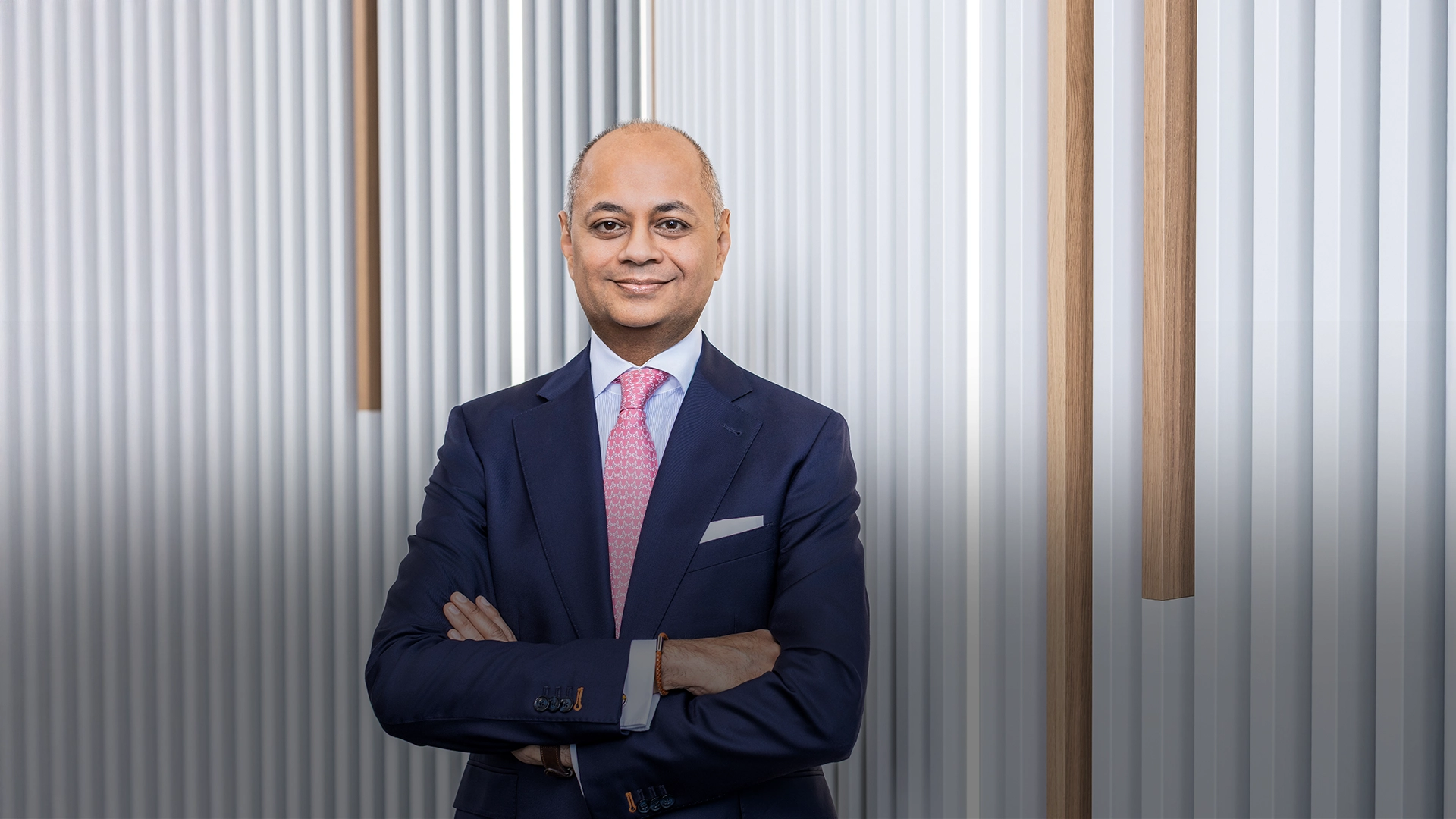
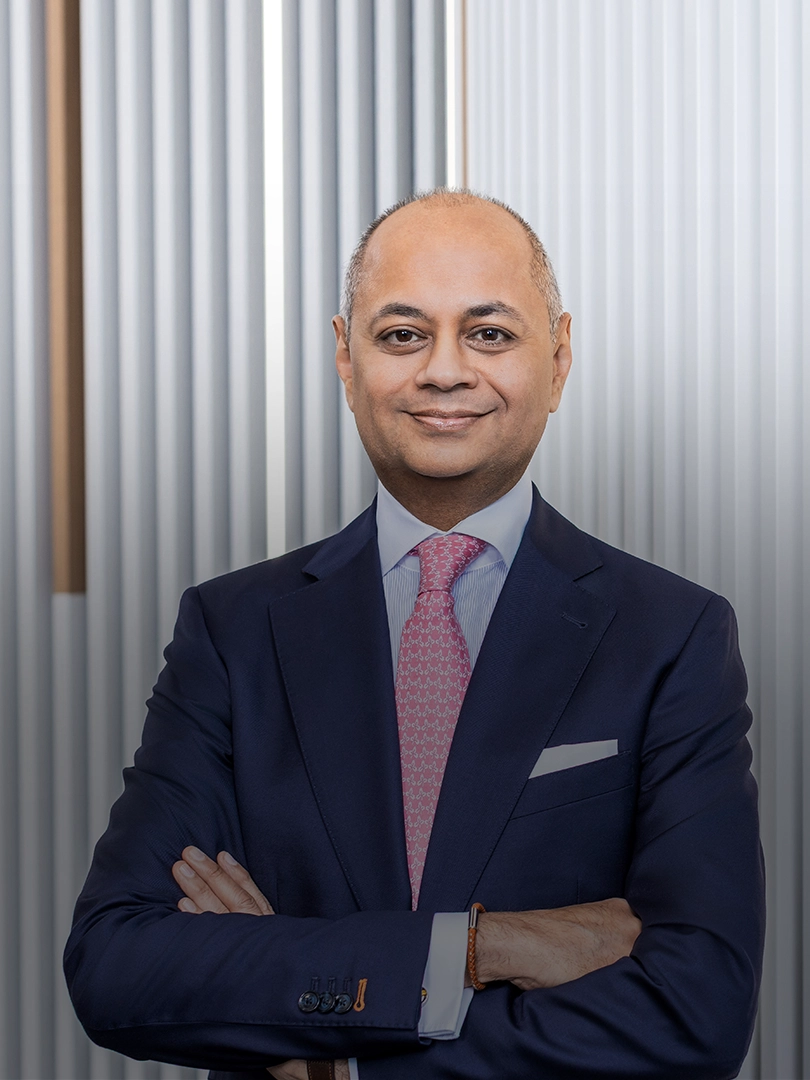
How is Fresenius responding to this new transactional world order? With confidence and determination. For we have much to contribute to shaping the healthcare systems of the future. Over the past three years, we have successfully implemented our #FutureFresenius strategy and created a new Fresenius that is innovative, relevant, resilient, and adaptable. At the same time, we have significantly bolstered our company’s economic strength.
This strong foundation allows us to focus on the opportunities ahead. Today, healthcare is no longer only a social responsibility – it has become a strategic factor for the stability and national security of every country. Healthcare systems around the world are under pressure. They are often too expensive, too inefficient, not sufficiently focused on measurable quality, and overstretched. They were built for a different era.
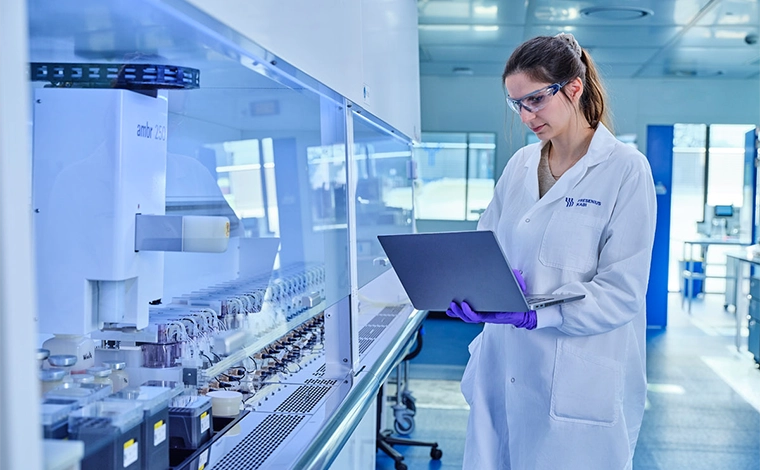
Today they must deliver high-quality care, keep costs in check, and function reliably even under crisis conditions. Meeting these demands requires a fundamental transformation of healthcare systems – supported by adapted political frameworks, a strategic industrial policy for the healthcare sector, and companies that actively drive this change.
Healthcare needs a strategic industrial policy
Fresenius contributes to robust value chains, strong local presence, and high-quality, affordable care. The United States is a particularly good case in point. We are relevant in the world’s largest healthcare market because we help secure medical supply and provide affordable, high-quality medicines through our generics and biosimilars. More than 70 percent of the medicines we sell in the United States are produced there. This is the result of our Local-for-Local approach. One concrete example is our collaboration with the American manufacturer Phlow. Together we are bringing epinephrine injections to the U.S. market. Epinephrine is used, among other things, to treat severe allergic reactions. Phlow produces the active pharmaceutical ingredient (API); we manufacture the finished doses for hospitals across the country. Together we are establishing a domestic end-to-end supply chain for a medicine that has frequently been affected by shortages in the United States.
This is only one of many examples. In Europe and in our other markets, we also contribute to reliable healthcare provision – be it through our hospitals and healthcare centers or through our medical technologies. In 2025, Fresenius products touched the lives of around 450 million people worldwide. In our hospitals, we treated 27 million patients. This underscores both our responsibility and our commitment.
Three years of #FutureFresenius – tangible, measurable progress
Three years ago, we launched our transformation program #FutureFresenius. Our goal was to make Fresenius more focused, simpler, and more performance-driven. Today it is clear that this path has paid off. Fiscal year 2025 demonstrates this once again. It also marks the start of the third phase in our strategy: Rejuvenate.
Fresenius achieved organic revenue growth of 7 percent, reaching €22.6 billion.
EBIT amounted to €2.6 billion, with 6 percent growth in constant currency. Revenue and EBIT were therefore within the forecast range that we raised over the course of the year. The EBIT margin reached 11.5 percent.
Core earnings per share (Core EPS, excluding FMC) increased by 12 percent in constant currency.
Our leverage ratio declined significantly to 2.7x net debt / EBITDA, within our newly defined target corridor.
Strong free cash flow enabled us to reduce net debt by around €3 billion within two years – roughly one quarter. Our tremendous progress in deleveraging allowed us to reduce interest expenses by more than €100 million in 2025. This in turn increases our financial flexibility and creates additional strategic options.
2025 was not without challenges. The introduction of U.S. tariffs, depreciation of the U.S. dollar, discontinuation of energy relief payments for our hospitals in Germany, and changes in the Chinese government’s procurement policy together created several hundred million euros of headwinds. Nevertheless, we achieved our targets and delivered profitable growth. With clear priorities, it is possible to strengthen the balance sheet while growing organically and profitably.
Our focus at Fresenius also includes actively managing our shareholding in Fresenius Medical Care (FMC). In 2025, we sold shares in FMC and successfully placed exchangeable bonds, generating gross proceeds of €1.1 billion. We used these proceeds to strengthen our balance sheet and create value for Fresenius. Through this transaction, we reduced our shareholding significantly. As an anchor shareholder, we intend to participate in FMC’s value creation and continue to support the company through our representatives on its Supervisory Board.
» How is Fresenius responding to this new transactional world order? With confidence and determination. «
The strong development of Fresenius was also reflected in the capital markets. Over the past year, the Fresenius share price increased by 46 percent, making it one of the top performers among healthcare stocks worldwide. During the same period, our benchmark index, the STOXX Europe 600 Health Care, rose by around 5 percent. From October 1, 2022, the start of #FutureFresenius, to December 31, 2025, our share price increased by more than 120 percent, compared with 22 percent for the benchmark index.
For us, this reflects renewed confidence in our strategic direction, our financial discipline, and the reliability of our execution. We have also received recognition through numerous awards: as an employer of choice in 13 countries, from major purchasing organizations as a top supplier, in hospital rankings, and through excellent ratings for medical quality.
Fresenius has six business segments. Our ambition is to be among the best in the world in each of them.
Fresenius Kabi: The team has consistently and successfully implemented the Vision 2026 plan for the four Kabi businesses. The strategic focus on the three growth vectors of Biopharma, Nutrition, and MedTech, complemented by a strong Pharma business – what we call “3+1” – is increasingly delivering results. We have therefore raised the structural margin band for Fresenius Kabi – our ambition level for the coming years. We are increasing the EBIT margin ambition from 16 to 18 percent to 17 to 19 percent.
Pharma: We further strengthened our position as a global leader in IV generics and IV solutions. In 2025, we launched 16 new products in the United States – exceeding our own target. We continue to invest in expanding our manufacturing capacities and maintain a high pace of market launches.
In Nutrition, we are among the global leaders in integrated care. We are strengthening our innovation pipeline and investing in additional capacity. One example is the development of nutritional supplements designed to reduce certain side effects associated with GLP-1 agonist therapy. Clinical nutrition is increasingly evolving toward products tailored to specific disease areas – for example in oncology. We are aligning this attractive business accordingly.
In MedTech, one focus is the industrial manufacturing of our smart Ivenix infusion pump system. In plasma collection, we are advancing use of the Adaptive Nomogram – an algorithm that enables an average 11.5 percent higher plasma collection per completed donation. In the fourth quarter, we completed the rollout of the Adaptive Nomogram across the U.S. plasma donation center network of BioLife Plasma Services faster than planned. This is a strong example of how we scale innovation.
We are also exploring opportunities in the field of cell and gene therapy, particularly CAR-T cells. The goal is to genetically modify T cells so that they can attack cancer cells. These therapies are expensive but groundbreaking. Through the European Easygen consortium, we aim to work with partners to simplify and reduce the cost of manufacturing these cells.
Biopharma is a comparatively young business that is developing at full speed. Over the past years, we have built a vertically integrated powerhouse. With 11 products across 9 molecules, we are successfully present in global markets. In addition, 15 further molecules are currently in different stages of development within our pipeline. Our vertical integration with mAbxience, in which we hold a majority stake, provides a strategic competitive advantage. Biosimilars are essential building blocks for future healthcare systems, offering highly effective and affordable medicines for oncology and autoimmune diseases.
The European launch of our denosumab biosimilars Bomyntra® and Conexxence® (osteoporosis and oncology), launch of our ustekinumab biosimilar Otulfi® (autoimmune diseases) in the EU and United States, and further expansion of the global market share of our tocilizumab biosimilar Tyenne® (autoimmune diseases) contributed to a record year. Our mid-term ambition for Biopharma is clear: by 2030, we aim to double both revenue and the number of molecules compared with 2025, while achieving an EBIT margin of around 20 percent.
» In 2025, Fresenius products touched the lives of around 450 million people worldwide. In our hospitals, we treated 27 million patients. «
Our Fresenius Helios hospital business holds a leading position in Germany and Spain.
Helios Germany is well positioned for hospital reform in Germany. We made timely decisions to group our hospitals into regional clusters, concentrate medical expertise at specific locations, and leverage scale effects within our hospital networks. In 2025, we increased our quality rate to 92 percent – the highest level ever. This means that in 92 percent of treatments, outcomes at our hospitals are better than the national average.
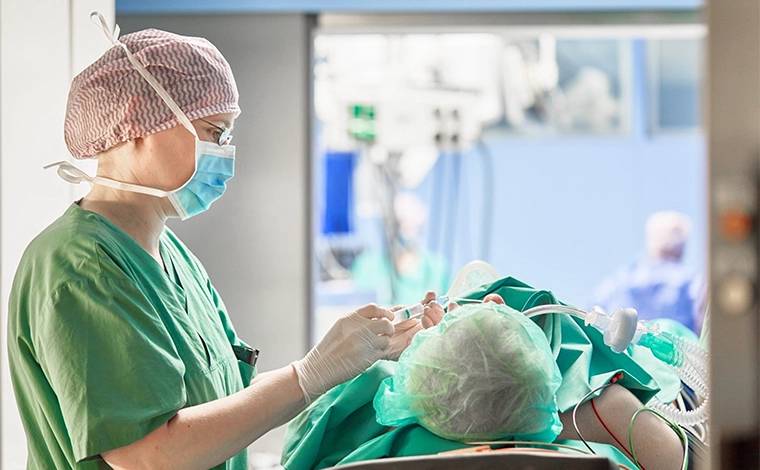
Quirónsalud in Spain is among the most innovative hospital groups in Europe. Digitalization and artificial intelligence play an important role in its success. Around nine million people are registered on our physician and patient portal Casiopea, enabling a digital patient journey. AI-driven applications are integrated into this platform. To name two examples: The AI solution Scribe converts physician-patient conversations into clinical documentation. Argos, an AI-based monitoring platform, detects hospital infections at an early stage and helps protect patients.
Rejuvenate: From transformation to sustainable value creation
We have named the current phase of our #FutureFresenius strategy Rejuvenate. Rejuvenate means renewal and fresh momentum. We are expanding our innovation pipeline in many areas: through new molecules and licensing agreements in Biopharma; through new formulations in Nutrition; through the expansion of industrial manufacturing in MedTech; through investments in our production capacities and supply chains in Pharma; and through digitalization, AI, and robotics in our hospitals. This rejuvenation is already delivering results. Products we have launched since 2023 generated more than €500 million in revenue in 2025, with an EBIT margin of around 20 percent.
Rejuvenate also includes strengthening our core businesses: Upgrade our Core. We invest selectively in the performance of our core operations – in processes, technologies, and capabilities, for example in a robust IT infrastructure and in expanding manufacturing capacity.
» The new Fresenius is innovative, relevant, resilient, and adaptable. «
The second element is: Scale our Platforms. We have structured our businesses along three platforms: (Bio)Pharma, MedTech, and Care Provision. We achieve this scaling primarily through organic growth and through the development of ecosystems. Targeted bolt-on acquisitions and new partnerships can complement this approach.
All of this serves one single objective: elevate performance. This is where we want to take Fresenius – toward a leading franchise that helps shape the future of healthcare, becoming a globally leading, relevant, and innovative healthcare company.
We firmly believe that healthcare delivery will in future increasingly rely on digital systems. Looking ahead, we aim to build a digital healthcare ecosystem in Germany and Europe together with partners – enabling the secure use of artificial intelligence and the responsible handling of health data. An important step in this direction is a strategic partnership with SAP. This is just a first step and certainly not the last. We are also actively involved in innovation and other networks because such exchanges are essential for a modern healthcare system.
We bring deep domain expertise to these partnerships – extensive knowledge of medical care. As a manufacturer of medicines, clinical nutrition, and medical technology, and as an operator of hospitals, we understand healthcare like few other companies. AI companies contribute their technical expertise to these networks. Together, this benefits patients. The future of medicine will not be humans versus machines, but humans plus machines.
Innovation and sustainable growth require the best people. #TeamFresenius comprises 178,000 colleagues worldwide and 6,800 trainees and dual-study students in Germany. We invest systematically in education and training while integrating modern technologies. Trainees use a VR headset to simulate hospital workflows. Surgical teams train with Da Vinci surgical robots. Service technicians work with AI-based language models. This approach is a strategic advantage in the competition for talent.
Capital allocation and shareholder perspective
For you as shareholders, it is essential that this strategic direction is accompanied by disciplined capital allocation. We invest selectively in growth, strengthen our balance sheet, and ensure that you participate appropriately in the Company’s success. For fiscal year 2025, we will propose to the Annual General Meeting a dividend of €1.05 per share, an increase of 5 percent compared with the previous year. The payout ratio is 37 percent.
For the current fiscal year, we expect organic revenue growth of 4 to 7 percent and currency-adjusted growth in core earnings per share (Core EPS) of 5 to 10 percent. We have included Core EPS in our outlook for the first time in order to place even greater emphasis on value creation for you, our shareholders. The outlook takes geopolitical volatility into account, but does not include extreme scenarios.
We are confident – not because the environment is easy, but because we are prepared: with a clear strategy, a compelling portfolio, strong momentum, and a dedicated team.
On behalf of the Management Board, I would like to thank all our colleagues for their outstanding performance. My sincere thanks also to the Supervisory Board and the Else Kröner-Fresenius-Stiftung for their trustful cooperation. And to you, our shareholders, thank you for the trust you place in us.
Yours sincerely,
Michael Sen
Chairman of the Management Board
EBIT is calculated by subtracting costs of revenue, selling, general, and administrative expenses, and research and development expenses from revenue.