





Our commitment to human rights
We are committed to respecting human rights.
Respecting human rights is an integral part of our responsibility as a global healthcare group. We acknowledge this responsibility in our Human Rights Statement – both in our own line of business and along our value chain.
The following graphic illustrates what this means in practice. It shows how people come into contact with our company.
Potential human rights impacts in the value chain

1 – Employees in the value chain
Anjing and Lisa work on preliminary products that we source from our suppliers. We then process these products in our own production facilities – to manufacture medical technology, for example, that helps treat people in hospitals. We expect our suppliers to respect the human rights principles laid down in our Human Rights Statement and our Code of Conduct for Business Partners – in both their own activities and in their value chains. That’s because the work done by people like Anjing and Lisa, who are embedded in our value chain, may entail human rights risks or even violations of human rights. We are committed to doing everything within our power to take appropriate preventive or remedial measures.
2 – Residents and neighbors
Dunya lives with her children next to one of our production sites. Even though she is neither working on preliminary products nor employed by Fresenius, her human rights must be respected. For instance, Fresenius is responsible for preventing water and air pollution and excessive noise pollution to support the well-being of people like Dunya and her children.
3 – Our business partners’ employees
Alejandro works for a logistics company that helps Fresenius to transport medicinal products and medical technology. As a direct contractual partner, his company is an important part of our value chain. We take a risk-based approach and analyze the potential impact on people like Alejandro. Where necessary, we take additional preventive measures.
4 – Employees
Chi, Benjamín, Shiva, and Carmen work for Fresenius. Despite their different professions and areas of responsibility, they have one thing in common: Their employer Fresenius is responsible for respecting their human rights in their working environments. This includes ensuring their health and safety in the workplace by providing appropriate protective equipment when dealing with patients. It also includes making sure that people like Chi, Benjamín, Shiva, and Carmen are trained to handle equipment and adhere to the minimum statutory break and rest periods.
5 – Patients
We do our best every day to keep millions of patients like Najuk and Valentina healthy. Whether in hospital, at home, or as outpatients, they are part of our value chain. While Najuk is treated in hospital, Valentina receives our medication at home. The well-being of Najuk, Valentina, and all our patients is at the heart of our human rights due diligence obligations.
Our Human Rights Program at a glance
We aim to put our Human Rights Statement into practice through our Group-wide Human Rights Program, which is based on regular risk assessments that focus on our own activities and those of our suppliers. After all, we can only take appropriate preventive and remedial measures if we are aware of the risks. Our Human Rights Program also includes a whistleblower system, where we investigate potential violations reported to us. We also document our activities and measures and provide transparent reports on our progress.

Our Human Rights Program is based on internationally recognized standards and frameworks, including the Universal Declaration of Human Rights, the ILO’s Core Labor Standards, the UN Guiding Principles on Business and Human Rights, and the OECD Due Diligence Guidance for Responsible Business Conduct.
You can find our Human Rights Statement here.

Lasse Kowalewski
Head of the Fresenius Group Human Rights Office
“Our commitment to human rights is not just about complying with legal regulations and it certainly isn’t empty talk. It is closely related to our values and our promise: Committed to life.”
Joint commitment to higher standards in supply chains
Fresenius Kabi is an associate member of the Pharmaceutical Supply Chain Initiative (PSCI), a group of leading pharmaceutical and healthcare companies. The aim of the initiative is to promote responsible supply chain management. The PSCI’s principles set clear standards and provide guidelines covering ethics, labor rights, health and safety, environmental sustainability, and supplier management systems.
Fresenius Kabi is actively working to meet the requirements for full PSCI membership and continuously develop its cooperation in the supply chain. This especially includes the development of an audit program for sustainability in the supply chain, the rollout of which is planned for 2026.
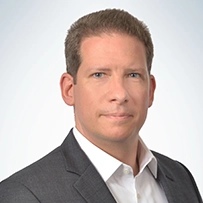
Marco Krämer
Director of Supplier Quality Management & Human Rights at Fresenius Kabi
“PSCI membership not only unlocks access to joint supplier audits and training courses for our suppliers – through our involvement in PSCI working groups, we make a tangible contribution to the improvement of global standards. In addition, we are consistently making our own progress when it comes to responsible supply chain management.”