





Our commitment to circularity & waste
At Fresenius, we focus on reducing our waste and embedding circular principles into product design and packaging solutions.1
When it comes to conserving resources, we must always try to strike the right balance between resource efficiency and hygiene requirements. Disposable items are often used in hospitals for hygiene reasons. Our options to save resources are limited here. Strict regulations governing medicine packaging also make it difficult for us to do this. A key way of conserving resources therefore involves developing products that last as long as possible, reusing resources wherever possible, and taking a systematic approach to the disposal of waste.
Infusion bag production – recycling production waste
Fresenius Kabi manufactures infusion bags in line with strict quality standards. The process of cutting the primary film along the edges to make the bags generates waste in the form of offcuts that were previously thrown away. Based on Fresenius Kabi’s own calculations, these offcuts alone account for around 800 kg of the production waste generated daily at the Friedberg site.
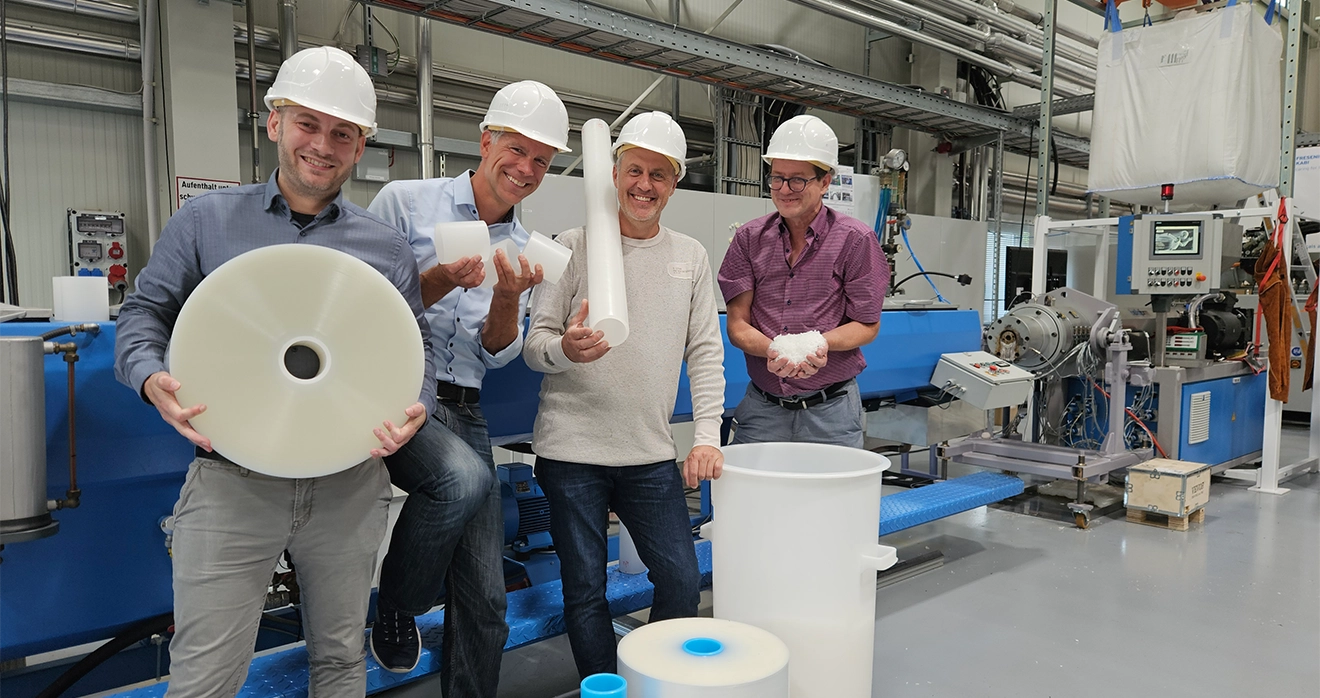
Fresenius Kabi employees have come up with an idea for how they can be recycled in the future. It involves the shredded film being melted down and used to make new film cores. These cores are needed in production anyway, with film wound around them before everything is then used in the plants to make the infusion bags. Until now, we have had to buy the film cores externally.

Plans are currently underway to put the idea into practice.
Understanding and managing resource streams
To make sure that we use raw materials as efficiently as possible, we have to keep a close eye on our resource inflows – in other words, all raw materials and other materials that we procure and use. At the same time, resource outflows in the form of waste hold great potential as valuable resources.
Active pharmaceutical ingredients (APIs) play a key role in our production processes, followed by plastic parts and packaging. Consumables for care and medical treatment are indispensable in our healthcare facilities.

Knee and hip operations – reducing single-use packaging in the operating room
Around 30,000 metric tons of waste are generated annually at Helios in Germany. The packaging of surgical materials accounts for a significant proportion of this figure. A project set up by the Ortho-Campus in Krefeld is helping to reduce packaging waste associated with knee and hip operations. The surgical materials needed for these procedures are bundled together and delivered in ready-made, standardized, and hygienically packaged medical sets. Besides reducing packaging waste when compared to individually packaged materials, it also saves the time it would otherwise take for the surgical team to open and dispose of the packaging and prepare for each individual operation. An internal evaluation of around 2,000 hip and knee operations performed annually at the Ortho-Campus reveals that the medical sets can reduce the waste generated by the packaging of the surgical materials used for these procedures by around 80%.2
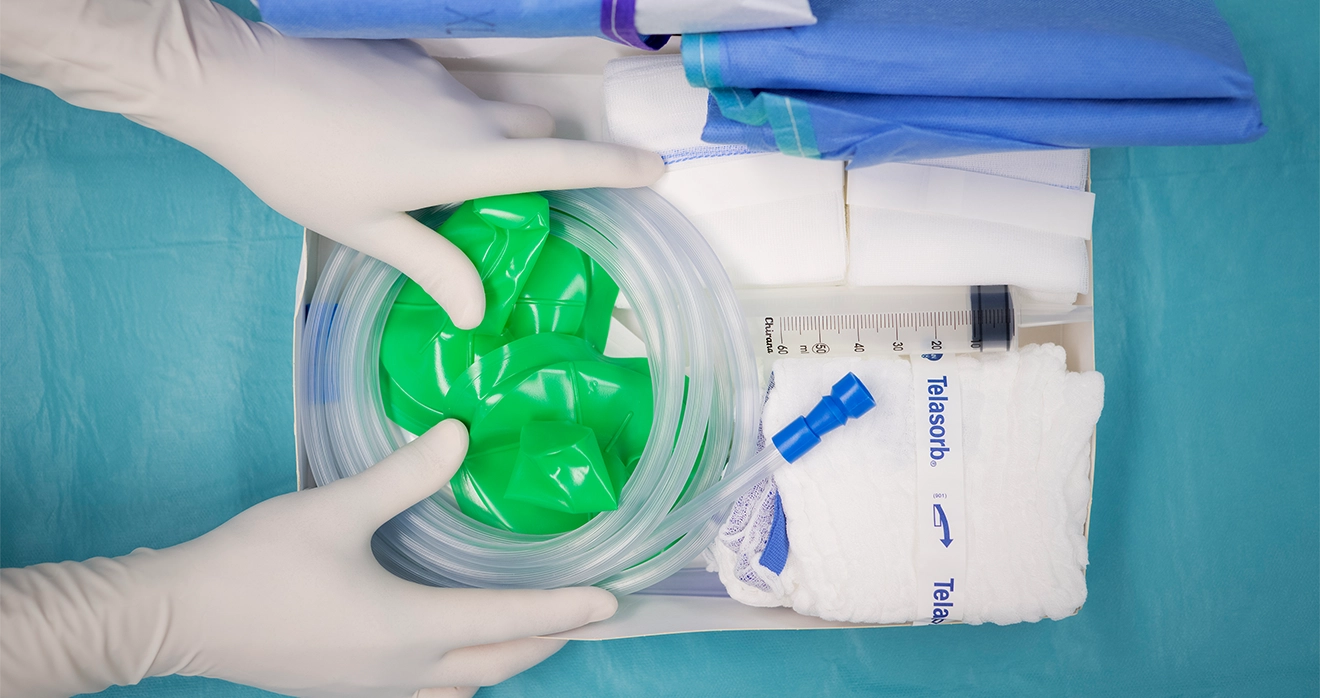
The individual consumables packaging needed for the roughly 30,000 hip and knee operations performed annually at Helios currently still generates about seven metric tons of waste across all of the approximately 70 orthopedic departments. This is equivalent to around 3,000 yellow bags. Once the new customized sets are introduced everywhere, we calculate that only around 1.4 metric tons of waste will be generated by consumables packaging. The plan is for the medical sets to be used for all hip and knee operations in the future.
Waste – a focus on safety and hygiene
Systematic waste management is designed to make efficient use of resources and reduce environmental pollution. In some cases, however, corresponding regulations vary by municipality, country, and operating company. We therefore adapt our waste management system depending on the business activity and location.
Clinical waste – clear labeling designed to simplify disposal
At the Helios hospitals in Germany, the color-coded waste container concept, which was redesigned in 2024, helps to simplify the sorting of waste such as medicines or infectious waste. Accompanied by an awareness campaign and an international guide in six languages, the concept is designed to reduce the improper disposal of waste and make it easier for employees to dispose of it correctly.

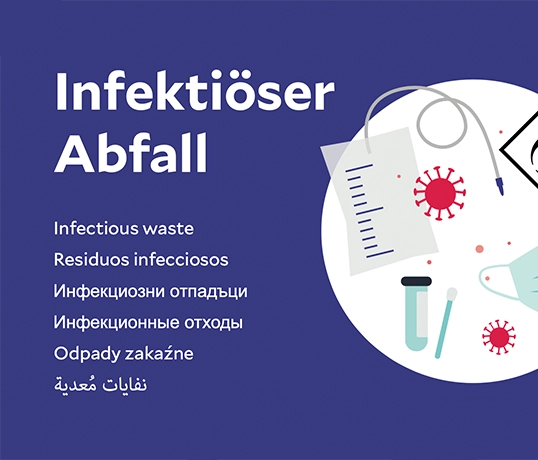
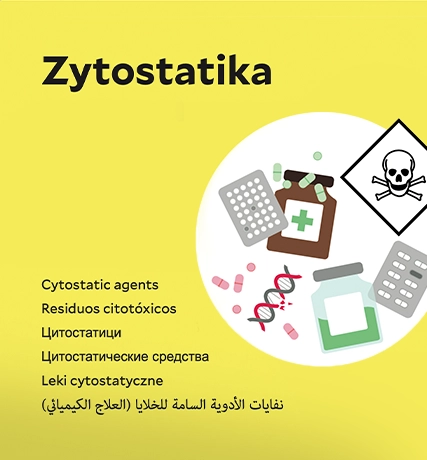
The different types of waste are presented in several languages together with pictures to help improve the sorting of waste. There is a need to comply with special regulations governing the disposal of infectious and other hazardous waste in hospitals. Recyclable waste can be recycled if collected correctly.
Closed-loop filtration for hazardous waste from surgeries
Surgical procedures demand high levels of precision and safety, but they also produce significant amounts of waste that require careful handling and disposal. For surgeries generating large volumes of fluids, these are typically collected in heavy disposable containers for incineration.
Quirónsalud has tested a closed-loop filtration system for these types of surgeries. The system replaces the traditional containers by filtering the fluids so the now-clean liquid can be discharged into the standard wastewater system, leaving only the filter as waste.
As an additional benefit, the system reduces the risk of hazardous splashes and spills in the operating room by eliminating the need to replace the disposable containers when they become full.
The assessment of the pilot project is planned for completion in the course of 2026.
The waste in our healthcare facilities and production plants undergoes various disposal and recovery processes, depending on the type.
Disposal and recovery processes

1 Fresenius reports on concepts, measures, and the level of progress relating to the use of resources in the audited Sustainability Statement 2025.
2 In a standard operation, the medical kits generate 80% less waste by reducing the amount of outer packaging. Additional materials may also be needed, however, depending on the circumstances of the operation.