


ESRS 2 General disclosures [ESRS 2] General disclosures
Disclosure requirement |
|
Title with reference |
|---|---|---|
BP-1 |
|
|
BP-2 |
|
|
GOV-1 |
|
The role of the administrative, management and supervisory bodies |
GOV-2 |
|
|
GOV-3 |
|
Integration of sustainability-related performance in incentive schemes |
GOV-4 |
|
|
GOV-5 |
|
Risk management and internal controls over sustainability reporting |
SBM-1 |
|
Strategy, business model and value chain (partial utilization of the phase-in option (SBM‑1.40b, c)) |
SBM-2 |
|
|
SBM-3 |
|
Material impacts, risks, and opportunities and their interaction with strategy and business model (partial utilization of the phase-in option (SBM‑3.48e)) |
IRO-1 |
|
Description of the process to identify and assess material impacts, risks, and opportunities |
IRO-2 |
|
Disclosure requirements in ESRS covered by the undertaking’s Sustainability Statement |
Basis for preparation
Basis for preparation [BP-1] General basis for preparation of the Sustainability Statement
This Group Sustainability Statement (Sustainability Report) is presented for the 2025 fiscal and calendar year and aims to inform the Fresenius Group’s (Fresenius or the company) stakeholders about sustainability activities in a transparent manner. The Sustainability Statement is prepared in full compliance with the European Sustainability Reporting Standards (ESRS) in order to fulfill the requirements of the Corporate Sustainability Reporting Directive (CSRD). It further fulfills the requirements for the non-financial Group report to be prepared in accordance with Sections 315b to 315c in connection with Sections 289c to 289e of the German Commercial Code (HGB).
In addition, with the information provided in this Sustainability Report, the Fresenius Group complies with the requirements of Regulation (EU) 2020 / 852 of the European Parliament and of the Council of June 18, 2020 on the establishment of a framework to facilitate sustainable investment and amending Regulation (EU) 2019 / 2088 (hereinafter referred to as the EU Taxonomy Regulation).
The Sustainability Report has been prepared on a consolidated basis and refers to the same scope of consolidation as the financial reporting. The report therefore covers the Group including its business segments, i.e. all fully consolidated companies under the legal or actual control of Fresenius SE & Co. KGaA, Bad Homburg, Germany. The business segments Fresenius Kabi and Fresenius Helios are also described as Operating Companies. Information regarding business units, market or product segments within an Operating Company are presented in the topical standards if deemed necessary, for example on Fresenius Helios in Germany or in Spain.
The Sustainability Report covers both the company’s own business operations and the upstream and downstream value chain, provided that the identified significant impacts, risks, and opportunities affect the value chain. Those focusing only on the value chain are addressed accordingly. Information on the extent to which policies, actions, targets, and metrics cover the value chain is presented in the relevant sections of the respective topical standards.
Information provided on approaches, guidelines, and controls at the company apply to the geographies in which the company operates production sites, healthcare facilities, or other operating entities. If Fresenius has identified material impacts, risks, or opportunities in the value chain, these are addressed in the respective topical standards. The same applies if the company is contractually or legally required to do so. The most relevant stakeholder groups are explained in section SBM-2 Stakeholders and partnerships in this standard.
The information in the Sustainability Report is comprehensive from Fresenius’ perspective. Selected information has been excluded due to intellectual property, know-how, or the results of innovations. An exclusion is made on the assumption that such data or information, individually or in aggregate form, may represent a potential competitive advantage for the benefit of one or more stakeholders active in the healthcare market or is subject to a non-disclosure agreement. The company classifies this information as sensitive information. These include measures for innovation projects at the early intervention stage.
Therefore, Fresenius provides exemplary activities that relate to impacts, risks or opportunities identified and support a management approach.
Vamed’s business unit VAMED High End Technical Services GmbH was transferred to Fresenius and operates under the name Fresenius Health Services (FHS) from 2025. The divested entities of Fresenius Vamed are included in the provided data until completion of disposal of the respective entity. The same applies to those entities which remain in the Group and are consolidated in the segment Corporate / Other:
Only those units whose disposal has not yet been completed are included in the reporting date figures.
For units sold during the year, figures are taken into account on a pro rata basis.
If estimates were used for the consolidation, explanations are provided in the respective topical standards.
Due to the reverse of operation of the remaining Vamed project business, Fresenius assumes that impacts, risks, and opportunities from these activities will continue to decrease in future. Therefore, these risks are no longer considered to be material. Fresenius has not made use of the exemption (pursuant to Article 19a (3) and Article 29a (3) of Directive 2013 / 34 / EU) to provide information on pending developments or matters under negotiation. Further information on the scope of consolidation and transactions can be found in the Notes and in the Combined Management Report. Explanations of definitions and the reporting scope of metrics are provided in the respective topical standards of this Sustainability Report. Since the 2025 reporting year, FHS has been integrated into the existing control and reporting processes of the Corporate / Other segment, and estimates are used.
References in this report to information outside the Combined Management Report including the Sustainability Report are additional information and not part of the Sustainability Report and its audit by PricewaterhouseCoopers GmbH Wirtschaftsprüfungsgesellschaft (PwC). No further information that would be obligatory ESRS information has been included by reference to sources outside the Combined Management Report including this Sustainability Report. References to additional information outside the Sustainability Report are noted under the relevant topics.
PwC has subjected the information in the Sustainability Report to a business audit in accordance with ISAE 3000 (Revised) to obtain limited assurance against the relevant legal requirements and has issued an independent auditor’s report. Individual selected indicators of the Sustainability Report were audited with reasonable assurance.
This is indicated by a footnote in the presentation of the selected indicators:
Total Scope 1 and Scope 2 CO2 emissions (market-based approach) in tons of CO2 equivalents (Fresenius Group)
Employee Engagement Index (EEI) (Fresenius Group)
Medical Quality:
Audit & Inspection Score (Fresenius Kabi)
Inpatient Quality Indicators (Fresenius Helios)
The independent auditor’s report can be found in the Annual Report. The Sustainability Report is part of the Combined Management Report. It is available in German and English. In the event of discrepancies between the versions, the German document shall prevail.
Disclosures in relation to specific circumstances [BP-2] Disclosures in relation to specific circumstances
For medium- (>1 to 5 years) and long-term (>5 years) time horizons, the definitions set out in the European Sustainability Reporting Standards (ESRS) 1 section 6.4 were used in the reporting, unless otherwise stated for a specific topic.
Estimates on the value chain are made, for example, in topical standard E1 Climate change. For the calculation of Scope 3 emissions, established calculation methods were used, such as the statistical distribution of waste disposal methods. Where estimates for own operations are used, this is explained in the respective Metrics section.
For all quantitative information and monetary amounts, the explanation is given in respective definitions or explanations of formulas on the basis of which sources Fresenius has carried out estimates. Further, the company explains the basis for the preparation of the metrics. This information is explained specifically for the respective metrics in the individual topical standards. When estimates are used, the responsible central function evaluates annually if this approach meets the expectations regarding accuracy and completeness. The company considers the estimates or assumptions made in the 2024 reporting year to be appropriate. If adjustments are made in the 2025 reporting year, or metrics are based on estimates, these will be explained in the respective topical standards.
Fresenius has decided to not use phase-in options for certain metrics. This is explained in the respective topical standards, in the metrics section. In topical standard S1, Fresenius decided to partially use phase-in. Specifically, this refers to the information on S1-7, S1-13 and S1-14 for which phase-in options are partially used:
S1-7 Characteristics of non-employees in the undertaking’s own workforce: Deviation in scope of consolidation; non-disclosure of additional sub-categories
S1-13 Training and skills development: S1-13.83a
S1-14 Health and safety metrics : S1-14.88d,e
For example, the aspect work-related ill health is not included in 2025 as for S1-14 the phase-option partially applies. For S1-7, as in 2024, the units of Quirónsalud are not considered, yet. In the E topical standards, phase-in options are fully used.
Unless otherwise stated, the information contained in this Sustainability Report on the market environment, market developments, growth rates, market trends, and competition in the markets in which the Group operates comes from publicly available sources. These include, but are not limited to, third-party studies or the company’s own estimates; these are also based primarily on data from publicly available sources. Information cited here from third-party sources has been reproduced accurately. As far as Fresenius is aware and based on the information published by these third parties, no facts have been omitted that would make the information reproduced inaccurate or misleading.
If the comparability of disclosures to previous reporting periods is not given, the changes and the reasons for them are explained in the respective topical standards in accordance with ESRS 1, section 7.4. These changes may relate to adjustments in the calculation methodology or to changes in the population due to transactions or structural modifications. In such cases, the comparability of information with previous reporting periods is often not ensured. If a retrospective adjustment of previous year’s figures is not possible, previous year values (comparative figures) are not reported in accordance with ESRS 1, section 7.4. This is explained in the respective topical standards. If an adjustment can be made, it is explained and the adjusted comparative figures are shown. In the 2025 reporting year, for example, this concerned the Scope 2 greenhouse gas emissions in the E1 topical standard. This is also the case in the S1 topical standard and is shown accordingly.
Fresenius reports Additional Performance Measures (APMs) that are in line with the provisions set out in the ESRS and are declared as company-specific metrics, e.g., the quality of treatment. These metrics are a useful tool for evaluating the operating performance of Fresenius. The respective metric shown as company-specific is not necessarily comparable with similar performance metrics published by other companies. Usage of such APMs is not as a substitute for sustainability information prepared in accordance with the ESRS; APMs are also not considered to be of a higher quality than the information required by the ESRS. The same applies to financial information prepared in accordance with International Financial Reporting Standards (IFRS) and contained elsewhere in the Annual Report.
Costs for the implementation of action plans (material actions) are included as OpEx (Operating Expenditure), see the Notes, section Notes on the consolidated statement of income, and as CapEx (Capital Expenditure – investments) in the balance sheet, see the Notes, section Notes on the consolidated statement of financial position. For information about the EU Taxonomy, please refer to the section Disclosures pursuant to Article 8 of Regulation (EU) 2020 / 852 (EU Taxonomy Regulation).
In general, the metrics presented are not validated by any external body other than the auditor. However, if this is the case, it is explained in the respective topical standard.
Governance
Sustainability organization [GOV-1] The role of the administrative, management, and supervisory bodies
In the Group, the responsibilities of the management and supervisory bodies are distributed as follows: Management is the responsibility of the general partner Fresenius Management SE, represented by its Management Board, which consists of five persons. The Supervisory Board of Fresenius SE & Co. KGaA supervises the management by the general partner. It comprises 12 persons: 6 shareholder representatives, elected by the Annual General Meeting, and 6 employee representatives. The members of the Management Board are listed by name in the Corporate Governance chapter, section Boards, in the Annual Report. The same applies for the members of the Supervisory Board of Fresenius SE & Co. KGaA.
The employee representatives on the Supervisory Board of Fresenius SE & Co. KGaA are elected by the European Works Council. If substitute members are appointed, they will take their place on the Supervisory Board after an employee representative leaves before the end of his or her term of office.
On the Management Board, at least one member should have many years of experience in each of the company’s key areas of activity. For Fresenius, these include essential medication, medical devices, and services for the critically and chronically ill, and operation of hospitals as well as healthcare services. In addition, one member should have many years of experience and expertise in finance and in the areas of corporate governance, law, and compliance. The majority of the members of the Management Board of Fresenius Management SE should have international experience in at least one of Fresenius’ key markets through their background, education, or professional activity. The Personnel Committee of the Supervisory Board of Fresenius Management SE assesses the necessary experience and acquired skills when selecting suitable persons. The listed requirements are met by the existing Management Board members.
The Supervisory Board members must have both the professional and personal qualifications to advise and supervise the Management Board in managing a global healthcare Group. The Supervisory Board of Fresenius SE & Co. KGaA proposes suitable persons to the Annual General Meeting for the appointment of new shareholder representatives to the company’s Supervisory Board. In 2025, scheduled elections were held. The presentation of the election proposals at the Annual General Meeting is based on an orderly nomination process: First, a candidate profile is drawn up based on the objectives for the composition of the Supervisory Board, the skills profile, and the concept in accordance with Section 289f (2) No. 6 HGB (diversity concept). The requirements in terms of skills and knowledge, professional experience, balanced composition, and personal suitability are defined in detail. The Nomination Committee then evaluates potential candidates based on the defined profile. The result of the selection process is presented to the full committee. Each member of the Supervisory Board should have the knowledge of good corporate governance of a capital-market-oriented company required for the proper performance of their duties. This includes knowledge of the basic principles of accounting, risk management, internal control mechanisms, and knowledge of compliance.
Further, each member of the Supervisory Board should have general knowledge of the healthcare industry. The Supervisory Board as a whole should also have a basic understanding of the healthcare sector.
An appropriate number of Supervisory Board members should have in-depth knowledge and / or experience in the areas of work that are important to the company: essential medicines and medical devices for critically and chronically ill patients, and operation of hospitals and healthcare services. The Supervisory Board should include an appropriate number of members with management experience in the healthcare sector.
Fresenius operates internationally. Therefore, each member of the Supervisory Board should have a basic understanding of Fresenius’ international activities. The Supervisory Board should include an appropriate number of members who, due to their background or business experience, have a special connection to the international markets that are important for Fresenius. The Supervisory Board fulfills these requirements in full.
Fresenius is striving for a balanced composition in terms of age, gender, country of birth, education, professional background, and international experience on the Management Board and on the Supervisory Board of Fresenius SE & Co. KGaA. To this end, the concept in accordance with Section 289f (2) No. 6 HGB defines criteria that are to be implemented when nominating candidates.
In the 2025 reporting year, the proportion of female members on the Management Board remained unchanged from the previous year at 20% (ratio of female to male: 1:4) and on the Supervisory Board 33% (ratio of female to male: 4:8; 2024: 33%, 4:8).
|
|
2025 |
|
2024 |
|---|---|---|---|---|
Countries of birth |
|
3 |
|
3 |
Number of women |
|
4 |
|
4 |
Number of men |
|
8 |
|
8 |
Average age |
|
59.8 |
|
61.5 |
Average term of office in years |
|
4.3 |
|
5.3 |
|
|
2025 |
|
2024 |
|---|---|---|---|---|
Countries of birth |
|
2 |
|
2 |
Number of women |
|
1 |
|
1 |
Number of men |
|
4 |
|
4 |
Average age |
|
53.6 |
|
52.6 |
Average term of office in years |
|
2.6 |
|
1.6 |
At least half of the shareholder representatives on the Supervisory Board should be independent within the meaning of the German Corporate Governance Code. Independent in this sense means anyone who does not have a personal or business relationship with the company, its executive bodies, a controlling shareholder, or a company affiliated with the latter that could give rise to a significant and not merely temporary conflict of interest. The ownership structure can be given appropriate consideration. When assessing independence, the Supervisory Board is of the opinion all shareholder representatives are independent. Some external stakeholders view employee representatives as non-independent. Based on this perspective, 50% of the members of the Supervisory Board are considered to be independent.
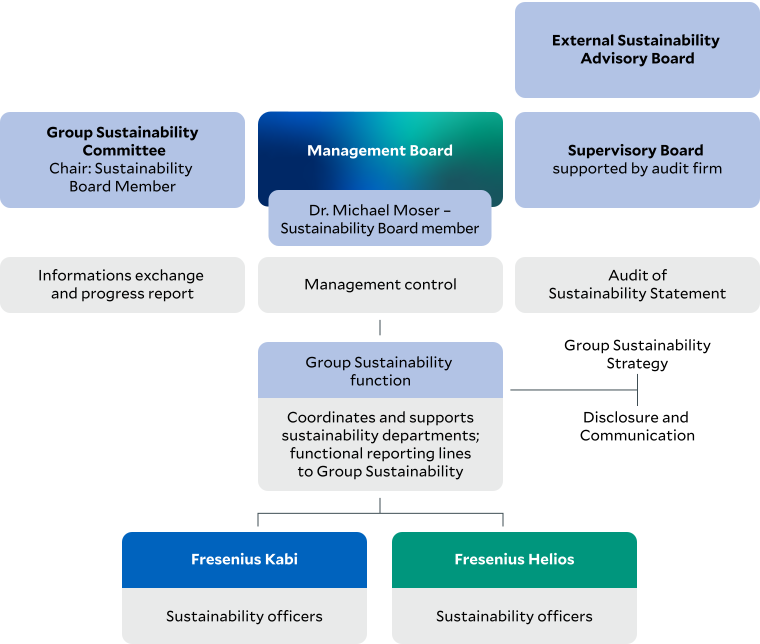
The Management Board, i.e. its members, is responsible for managing Fresenius SE & Co. KGaA and conducting its business. The Group-wide topic of sustainability and the related impacts, risks, and opportunities, are anchored in the responsibility of the Management Board member for Legal Affairs, Compliance, Risk Management, Sustainability, Human Resources (Labor Director), Corporate Audit, and for Vamed (hereinafter referred to as Sustainability Board member). In the reporting year 2025, this was Dr. Michael Moser.
The Supervisory Board of Fresenius SE & Co. KGaA also monitors the management by the general partner Fresenius Management SE with regard to sustainability and the related impacts, risks, and opportunities. The members of the Audit Committee in the reporting year are Ms. Susanne Zeidler (Chairwoman), Mr. Bernd Behlert, Ms. Grit Genster, Mr. Wolfgang Kirsch, and Dr. Christoph Zindel. They conducted a pre-audit of the Combined Management Report and also the Sustainability Report. To take account of the growing importance of sustainability, the Audit Committee of Fresenius SE & Co. KGaA has appointed Dr. Zindel as an ESG (Environment, Social, Governance) expert.
Responsibility for compliance, business conduct, and corporate governance in the Group lies with the Management Board and is assigned to the Sustainability Board member. The member is also responsible for the internal control and risk management systems.
The responsibilities of the Management Board of Fresenius Management SE and the Supervisory Board of Fresenius SE & Co. KGaA as well as the individual members of the corporate bodies are defined in the Articles of Association of Fresenius Management SE and Fresenius SE & Co. KGaA, as well as the rules of procedures both for the Management Board of Fresenius Management SE and the Supervisory Board of Fresenius SE & Co. KGaA. The key sustainability issues are anchored in the company’s governance structure.
The rules of procedure for the Management Board issued by the Supervisory Board of Fresenius Management SE determine the details of the work of this body. In particular, they regulate which areas the members of the Management Board are responsible for, which matters are reserved for the Management Board as a whole, and which resolutions are to be passed by it.
Internal reporting and control processes are designed to cover the impacts, risks, and opportunities within the company. Details of the responsibilities of the Management Board and Supervisory Board are explained in the respective topical standards. Furthermore, other internal committees inform, support, or advise the Management Board and the Supervisory Board on decisions as described.
Expert knowledge of the persons involved is ensured via defined recruiting criteria, job profiles, and the subsequent training and development based on the job requirements.
The Group Sustainability function acts as a center of expertise for all sustainability aspects within the Group. The function monitors regulatory developments, identifies material topics, and develops priorities and potential for implementing the Sustainability Framework adopted in 2025. These are translated into strategic management approaches in collaboration with the responsible corporate or segment function. The Group function supports its Group-wide implementation and reviews progress as part of the annual reporting. Furthermore, there are repeated exchanges with all Group functions and the Sustainability officers of the Operating Companies during the course of the year in order to take into account the respective business models and discuss the feasibility of measures. In addition, the Group Sustainability function is responsible for internal and external stakeholder communication related to sustainability and, together with the Group function Group Accounting, Sustainability Accounting department, for sustainability reporting.
After the end of the reporting period, a reorganization was announced, with effect from February 1, 2026. Among other things, this reorganization provides for the Human Rights function and the Environmental Compliance function to be separated from the Risk & Integrity Group function and integrated into the Group Sustainability function. This is intended to strengthen the already close cooperation, also with regard to the sustainability strategy. The Group function Risk & Integrity will also be restructured.
The identification, assessment, monitoring, management, and supervision of potential sustainability risks takes place both at Group level and in the Operating Companies as part of the risk management system. Sustainability risks are covered by the Group’s risk catalogs and risk reporting. In 2023, a Group-wide project to implement the requirements of the ESRS based on the CSRD examined whether there are any further potential sustainability risks for material topics. This assessment was validated in the reporting year for timeliness and validity. Any resulting changes in material topics are reflected in the 2025 Sustainability Report. Additional information on this can be found in section IRO-1 Materiality analysis.
Fresenius Group Sustainability organization
As part of risk management and the internal control cycle, material sustainability issues are subject to regular reviews, as described in the relevant sections of this Sustainability Statement. As part of the risk reporting, the Management Board is informed on a quarterly basis about the key sustainability aspects if risks exist, arise or incidents occur that could have a significant impact on the operating business, reputation, or value chain of the Group and its Operating Companies. In 2025, for example, this concerned the shortage of personnel in the healthcare sector. The Audit Committee of the Supervisory Board is informed of developments bi-annually and the Supervisory Board as a body is informed two times a year.
External partners, supervisory authorities, and internal audit experts from the Corporate Audit Group function or the responsible expert function carry out the audits – at least every two years or more frequently, e.g., certification audits. As explained in Fresenius’ Opportunities and Risk Report, there were no significant deviations from the Group’s ethical standards in 2025. Information on audits can also be found in the respective topical standards of this report. The Combined Management Report contains additional information on opportunities and risks as well as a detailed description of the risk management and internal control system.
The internal control system (ICS) is an important component of Fresenius’ risk management. It covers all critical processes, such as financial reporting, quality and patient safety management, cybersecurity, inventory, supply chain management, data protection, and sustainability management. Fresenius has documented the corresponding key control objectives in a Group-wide framework, thus bringing together the various management systems in the ICS in a holistic manner. Fresenius strives to ensure the security and reliability of its business processes through internal measures and their structured monitoring. Monitoring and evaluation by management also helps to ensure that process-inherent risks are identified and that controls are in place to minimize risks.
The Operating Companies carry out regular internal and external controls, analyses, and quality audits by the responsible specialist functions, topic-specific management systems, or external audit bodies. Such reviews of key topics concern, for example, a review of the application of quality management guidelines in a production area. These reviews are supplemented by the audit activities of the Corporate Audit Group function. Its activities are aimed at improving internal controls, optimize businesses processes and efficiency enhancements. Thus, added value can be generated for Fresenius and organizational targets can be achieved. The function supports the business activities, protects the corporate value of the Group, and thus improves Fresenius’ business activities. To this end, Corporate Audit conducts independent, audits to improve the appropriateness and effectiveness of risk management, control, and governance processes at all levels of the Group. Aspects such as sustainability, cybersecurity, and compliance are also taken into account in a risk-oriented manner.
The control and reporting structures defined within the Group form the basis for setting targets. Targets for the Group as a whole are defined by the respective Group function and presented to the Management Board and the Supervisory Board. Key sustainability targets have been defined as compensation-relevant targets for the compensation of the Management Board, as explained in section GOV-3 ESG targets in the compensation of the Management Board. Further explanations can be found in the respective topical standards. Targets for the Operating Companies are set by the respective management and, where relevant for the Group as a whole, communicated to the entire Management Board.
The organization and management of the Group and its Operating Companies are structured in such a way that Fresenius can identify and analyze the impacts, risks, and opportunities in the often fragmented markets and align the actions accordingly. In order to tap into new potential, the Group exchanges information with research groups and scientific institutions, for example. Fresenius also keeps a close eye on markets and the competition. The Operating Companies communicate on experiences internally, in order to identify and exploit additional opportunities and synergies. As part of strategic and operational planning process, Fresenius identifies and analyzes short-, medium-, and long-term opportunities and risks and derives targets from them. As explained above, the Management Board’s rules of procedure specify whether a key topic is assigned to an individual Management Board member or to the entire Management Board.
The Supervisory Board discusses the company’s planning and objectives on an annual basis. The Audit Committee, as the appointed body, also deals with sustainability reporting. The Audit Committee already received reports on the preparatory work for the reporting in accordance with the provisions of the EU CSRD guidelines at the meetings on October 15, 2025 and December 3, 2025. In particular, the legal framework for sustainability reporting for the 2025 fiscal year and the recording of KPIs and qualitative data points based on the applicable sustainability reporting standards (ESRS) were discussed again. In December, the update of the DMA and the resulting review and update of impacts, risks, and opportunities (IROs) were discussed.
The material sustainability aspects (see the Materiality analysis section in this topical standard) are each covered by Group functions, as explained in the topical standards. In the Operating Companies, the respective management and central departments perform these tasks. Clearly defined responsibilities within the Management Board, the internal governance structure, and processes for monitoring impacts, risks, and opportunities are designed to ensure that it is always informed about important business transactions, plans, developments, and measures within the Operating Companies, as well as material sustainability aspects. These structures and processes are explained in more detail in the respective topical standards.
The members of the Supervisory Board are responsible for the training and development measures required to fulfill their duties. Training and further training measures are intended to build up new skills (training) and update and strengthen existing skills (further training). The members of the Supervisory Board regularly obtain information from internal and external sources on the current status of the requirements for their supervisory activities. The Supervisory Board ensures that its members are continuously qualified, that their specialist knowledge is updated, and that their judgment and experience are further developed. Fresenius provides them with appropriate support in this regard. For example, experts from Fresenius’ specialist areas and external specialists provide ongoing information on relevant developments, e.g., on relevant changes in legislation and case law and on changes in accounting and auditing in accordance with IFRS. In the 2025 fiscal year, there was again internal training on the topic of ESG, on sustainability strategy, among others, with the participation of speakers from the company.
Fresenius established an independent External Sustainability Advisory Board for sustainability issues. Four experts from science, business, and consulting support Fresenius in further developing the sustainability strategy and advise the Sustainability Board member. The External Sustainability Advisory Board is designed to help advance the relevant topics programmatically within the Group. The expertise of the advisory board covers Fresenius’ main areas of activity in the field of sustainability: from the design and implementation of healthcare policies and climate protection to corporate sustainability principles, future-oriented business practices, sustainable leadership, and the transformation towards greater sustainability. Further participants at meetings are the Supervisory Board members Grit Genster and Dr. Christoph Zindel.
Consideration of sustainability aspects in management [GOV-2] Information provided to and sustainability matters addressed by the undertaking’s administrative, management and supervisory bodies
In the 2025 reporting year, the Group Sustainability Committee was established. The purpose of the committee, chaired by the Sustainability Board member, is to decide on the strategic and substantive design of the Sustainability Framework. The first meeting took place in November 2025. Previously, in the sustainability organization of Fresenius, the ESG Steering Committee was responsible for defining the sustainability topics and aspects that the management and supervisory board will address as a priority. A continuation of the ESG Steering Committee with regular meetings is currently not planned. For decisions required regarding the implementation and application of the ESRS, the executives who were formerly members of the ESG Steering Committee will be consulted as needed.
In addition to the risk reporting, the Management Board and Supervisory Board, and where applicable, their committees, are also informed about significant impacts and opportunities, the implementation of due diligence in the area of sustainability, and the results and the effectiveness of the policies, actions, metrics, and targets adopted. The Head of Group Sustainability informs the Board member for Sustainability on a bi-weekly basis. Information that is relevant for the Group Management Board or if approvals are required, it is presented in a Group Management Board meeting. The information is provided either directly by the Group Sustainability function, for example at least once a year to the Audit Committee, or by a responsible specialist function. The underlying responsibility is explained in the respective topical standards.
The Management Board and Supervisory Board take into account the impacts, risks, and opportunities when monitoring strategy, making decisions about important transactions, and in the risk management process for Group-wide risk management. In dealing with risks and opportunities, Fresenius acts exclusively within the applicable legal framework and internal guidelines.
The Supervisory Board dealt in particular with the following items in 2025, among other topics:
strategic alignment of the Fresenius Group and its business segments as part of the #FutureFresenius transformation process,
transformation of the Fresenius Group, including restructuring and divestment at Fresenius Vamed,
programs for the IT-transformation,
cybersecurity, and
further development of the corporate governance management systems (compliance management system, risk management system, internal audit system, and internal control system).
In addition, the Supervisory Board was informed about projects to expand production capacities and the product portfolio. The ESG expert appointed by the Audit Committee provided information about the work of the external Sustainability Committee. The Management Board of the general partner also regularly informed the Supervisory Board about the risk situation, risk management, and compliance within the Group.
ESG targets in the compensation of the Management Board [GOV-3] Integration of sustainability-related performance in incentive schemes
Sustainability is a material component of the business strategy. That is why Fresenius has defined ESG targets for the Management Board as part of their compensation system. In doing so, Fresenius aims to align the interests of employees and patients, as well as climate and environmental issues, with ambitions. Initially, all material aspects were considered and then prioritized. The ESG targets were defined in specific areas, listed in the table below.
|
|
Target |
|
Target achievement rate in % |
|---|---|---|---|---|
Medical Quality |
|
Audit & Inspection Score (Fresenius Kabi) |
|
138.89 |
|
|
Inpatient Quality Indicators (Fresenius Helios) |
|
128.38 |
|
|
|
|
|
Environment |
|
Total Scope 1 and Scope 2 CO2-Emissions (market-based approach) in t CO2-equivalents (Fresenius Group) |
|
120.83 |
|
|
|
|
|
Employees |
|
Employee Engagement Index (EEI) (Fresenius Group) |
|
85.61 |
The targets reflect identified material sustainability aspects from the materiality analysis. Further, in selecting the specific ESG targets, the company took into account the requirements of investors and society, as well as the current market practice of most DAX companies. The ESG targets are relevant to Fresenius, ambitious, and transparently measurable. They are aligned with the business strategy and can be pursued in an integrated manner within the governance structure. The compensation system for the Management Board and its components are approved by the Supervisory Board. The compensation of the Supervisory Board does not foresee a variable component.
Within the framework of the short-term variable compensation (Short-Term Incentive – STI) with a measurement period of one year, the ESG objectives continue to be included with a weighting of 15%. The focus here is on the areas of medical quality and employees. Medical quality is measured for the two Operating Companies on the basis of metrics, further information on which can be found in the topical standard S4 Consumers and end-users, Health and safety section.
In the area of employees, employee satisfaction is measured for the Group on the basis of the Employee Engagement Index (EEI). Further information on the EEI can be found in the topical standard S1 Own workforce, section Metrics, see MDR-M S1 Company specific, Employee Engagement Index.
|
|
ESG-Target |
|
20241 |
|
Target 2025 |
|
Result 20251 |
|
Target 2026 |
||||
|---|---|---|---|---|---|---|---|---|---|---|---|---|---|---|
Medical Quality |
|
Audit & Inspection Score (Fresenius Kabi) |
|
1.7 |
|
2.3 |
|
0.9 |
|
2.3 |
||||
|
|
Inpatient Quality Indicators (Fresenius Helios) |
|
|
|
|
|
|
|
|
||||
|
|
Germany |
|
90.7% |
|
88.0% |
|
91.9% |
|
88.0% |
||||
|
|
Spain |
|
73.3% |
|
75.0% |
|
77.4% |
|
75.0% |
||||
Employees |
|
Employee Engagement Index (EEI) (Fresenius Group) |
|
4.02 |
|
4.33 |
|
4.14 |
|
4.12 |
||||
|
||||||||||||||
In 2025, calculation methods for two targets was adjusted and the ambition level assessed and increased. This leads to adjustments for targets as follows: The ESG target medical quality: The methodology as well as the definition of the target ambition for the Inpatient Quality Indicator of Fresenius Helios in Spain were updated. This is explained in detail in topical standard S4, Section Health and safety of this Sustainability Report. For Germany, the methodology remains unchanged. Further, the methodology of the EEI was adjusted which is also explained in the respective topical standard S1 in this Sustainability Report. The new target for 2026 takes into account the disposal of shares due to #FutureFresenius, e.g. the deconsolidation of Fresenius Medical Care.
In the long-term variable compensation of the Management Board (Long-Term Incentive – LTI), with a measurement period of four years, ESG criteria account for 25% of target achievement. ESG target achievement in the LTI is measured on the basis of CO2e reduction. The calculation methodology is determined by the Supervisory Board.
The scope of the target includes the Operating Companies and the segment Corporate / Other. The target range is aligned with the long-term targets of Fresenius: The Group plans to reduce its own direct Scope 1 and indirect Scope 2 emissions by a total of 50% compared to the base year 2020 by 2030, and to achieve greenhouse gas neutrality by 2040. Emissions are calculated as CO2 equivalents and Scope 2 emissions on a market basis.
Further information on the ESG target in the LTI can be found in the Compensation Report. Information on the Group climate targets and greenhouse gas emissions can be found in the topical standard E1 Climate change.
In the reporting year, not all ESG targets for the members of the Management Board were achieved. This would have required an achievement rate of at least 100% per target. A detailed presentation can be found annually in the Compensation Report. The target achievement in 2025 is shown in the table.
The indicators relevant for determining the annual target achievement in relation to the compensation components for the Management Board, which are labeled by footnote, are audited with reasonable assurance, as stated on in the independent practitioner´s audit report in the Annual Report. The indicators are explained in more detail in the respective topical standards.
Declaration on due diligence [GOV-4] Statement on due diligence
The following table provides the required information on due diligence in this report.
Core elements of due diligence |
|
Paragraphs in the Sustainability Statement |
|---|---|---|
Integration of due diligence into governance, strategy, and business model |
|
|
Involvement of affected stakeholders in all key due diligence steps |
|
ESRS 2 GOV-2 |
Identification and assessment of negative impacts |
|
|
Measures to counter these negative impacts |
|
ESRS 2 MDR-A and transition plans in the respective topical standards |
Tracking the effectiveness of these efforts and communication |
|
ESRS 2 MDR-M and MDR-T in the respective topical standards |
Risk management and internal controls for sustainability reporting [GOV-5] Risk management and internal controls over sustainability reporting
The risk management and internal controls related to sustainability reporting are described in section GOV-1; this includes risks related to the sustainability reporting process. No new risks were identified in relation to sustainability reporting in the reporting year. The processes and controls associated with sustainability reporting have been further improved.
Strategy and management
The business model and value chain [SBM-1] Strategy, business model, and value chain
Fresenius is a globally active healthcare Group and one of the leading companies in its respective markets. The Group includes two independently operating, fully consolidated Operating Companies, which are managed by the operating holding company Fresenius SE & Co. KGaA: Fresenius Kabi specializes in products for the therapy and care of critically and chronically ill patients. Fresenius Helios is Europe’s leading private healthcare provider. The company includes Fresenius Helios in Germany and Fresenius Helios in Spain, which are the largest hospital operators in their respective home markets.
The segment Corporate / Other comprises the holding functions of Fresenius SE & Co. KGaA and Fresenius Digital Technology GmbH, which offers services in the field of information technology, as well as the Fresenius Health Services GmbH (FHS) which was founded in 2025. The Combined Management Report contains additional information on the business model and ownership structure of the Group, in particular on legal and economic factors as well as material sales markets and competitive positions.
Care Provision, represented by the Operating Company Fresenius Helios, accounts for the majority of revenue (approximately 60%). These are generated by treating patients in healthcare facilities. Healthcare products, such as the innovative solutions for critically and chronically ill patients provided by Fresenius Kabi, account for around 40% of Fresenius’ revenue.
Additional information on ESRS 2 SBM-1.40a-ii can be found in section Fundamental information about the Group of the Combined Management Report of the Annual Report.
Fresenius reports the number of the employees by geographic area in the topical standard S1 Own workforce, see section Metrics.
Sustainability goals and programs
Committed to Life, i.e. patient care, is the basis of the daily activities and understanding of how Fresenius perceives sustainability in the context of social responsibility. The Group wants to make a difference in healthcare and thus bring about changes for the benefit of people, especially patients. Relationships with stakeholders also play an important role, as explained in the section Stakeholder and partnerships in this standard.
Fresenius pursues specific sustainability goals, defines further ambitions, and implements corresponding sustainability projects. Progress is regularly reviewed and evaluated. From this, the extent to which the goals can be further developed and optimized is determined. Further details on the already existing ambitions are explained in the topical standards E1 Climate change, E3 Water and marine resources, S1 Own workforce, and S4 Consumers and end-users as well as the company-specific standard S-Digital transformation. If not otherwise specified, Fresenius’ ESG ambitions encompass the consolidated entities, and products and services of the Group. The target definition should take into account the impacts of the most important products and / or services as well as significant markets and customer groups, or how the targets may affect them. For example, the objective of treatment quality is clearly focused on the care provided to patients in the hospitals.
Sustainability Framework
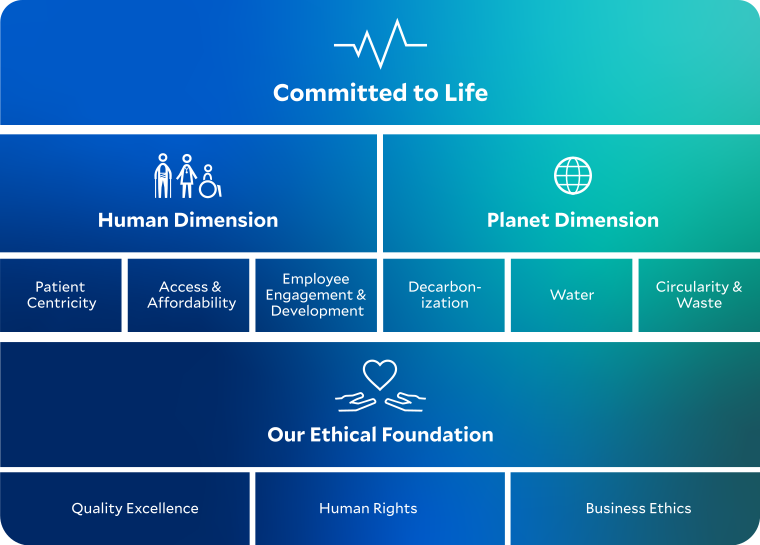
The new Sustainability Framework introduced in the 2025 reporting year specifies the previous approach and establishes a binding framework for sustainability performance. The goal is to better align the diverse activities across the Group, leverage synergies, and thus achieve more measurable impact – for patients, the environment, and the company. In line with the ongoing #FutureFresenius transformation, the new concept strengthens the implementation of the corporate strategy. It directly supports key priorities:
Strengthening the core business and
scaling the three therapy platforms – specialized (bio)pharma, targeted medical technology, holistic care.
Along the value chain, nine focus topics have been identified across the three dimensions of people, environment, and ethical foundation. Throughout the process, relevant stakeholders’ views were considered. For each topic, Group Sustainability, together with the responsible corporate functions and operational specialist functions, develops strategic indicators and measurable targets. In the Group Sustainability Committee, proposals for additional targets are discussed and will be decided in the future. These will complement the existing sustainability goals – such as reducing greenhouse gas emissions along the value chain. By the end of 2026, KPI shall be defined initially, from which further measurable targets can be derived.
The Sustainability Framework clearly demonstrates that Fresenius’ corporate strategy is closely linked to material sustainability aspects. The individual topical standards elaborate on the corporate and sustainability strategy. The ESG ambitions clearly define the material elements of the strategy, including the most important challenges. They are supported by numerous measures and projects, which are also explained in the respective topical standards. Supplementary information on ESRS 2 SBM-1.40g can be found in section Economic Report of the Combined Management Report of the Annual Report.
Value chain
Fresenius is active in more than 60 countries with subsidiaries, maintains an international sales network, and operates more than 50 production sites as well as more than 130 hospitals. The graphic below illustrates the value chain across Fresenius’ operating companies, as well as the impacts, risks, and opportunities (IROs) identified through the double materiality analysis in relation to the business model and upstream and downstream value chain. Further information can be found in the section IRO-1 Materiality analysis.
Fresenius value chain
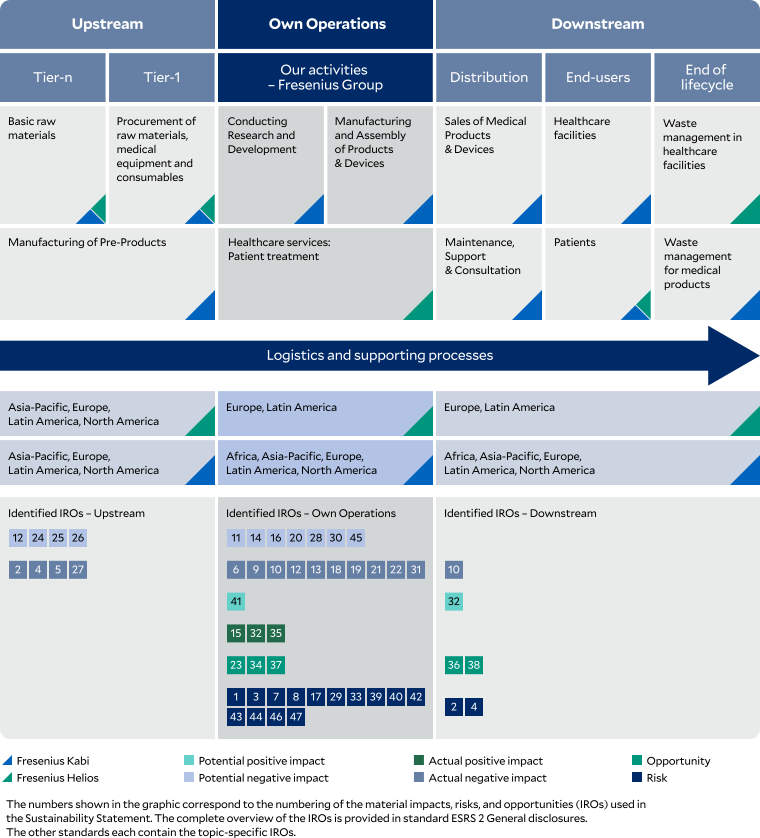
In the Group, purchasing processes are controlled by central coordination offices in the Operating Companies. Teams of experts bundle demand, conclude framework agreements, and continuously monitor current market and price developments. They coordinate global procurement for individual production sites or healthcare facilities and organize quality and safety checks on the raw materials and procured goods.
In an environment characterized by ongoing cost containment efforts by payers in the healthcare system and price pressure in the sales markets, security of supply and quality of supply play an important role. Fresenius therefore continuously optimizes their purchasing processes, standardizes procurement materials, develops new purchasing sources, and negotiates the best possible prices. In doing so, it is important to maintain a high degree of flexibility while meeting the strict quality and safety standards within the supply chain. A broad supplier portfolio reduces possible procurement or raw material bottlenecks in both the product and service business.
In the downstream value chain, the activities of Fresenius focus on the distribution of pharmaceutical products and the care of patients. The value chains differentiate, since in the product area the focus is on the distribution of products downstream, while in the hospital area, health services are provided in the own facilities and are therefore part of the value of the own business. This leads to different approaches to the management and control of business activities.
The products of Fresenius Kabi are shipped from the production plants to central warehouses, wholesalers, or directly to hospitals or patients via home care organizations. Fresenius Kabi maintains an international hub, e.g., in Friedberg, Germany, for a significant proportion of its range of products. Fresenius has an own sales organization with trained employees. However, Fresenius Kabi also uses external distributors in countries where Fresenius does not have an own sales team.
Fresenius Kabi’s customer base is broad. It includes hospitals, wholesalers, purchasing organizations, and healthcare facilities including home care organizations, as well as research institutes. In the United States, Fresenius Kabi distributes its products through GPOs (Group Purchasing Organizations). Internationally, Fresenius Kabi participates in public tenders by government entities, which are particularly relevant for the products.
Fresenius offers after-sales services, training, technical support, servicing, and maintenance and warranty arrangements in every country in which the products are sold. Fresenius Kabi provides product training and the operation of regional service centers, which are responsible for day-to-day international service support.
The information provided in topical standard S4 Consumers and end-users, Health and safety section, focus primarily on patients as well as healthcare professionals, as they come into direct contact with the products, use them, or are treated with them. These groups cannot always be clearly defined as consumers or end-users in the healthcare industry. Therefore, Fresenius describes the operational processes in accordance with the requirements of ESRS S4. In describing the management approaches, the perspective of Fresenius’ key stakeholder and person groups is taken. However, no further distinction is made as to whether there is a differentiation between consumers or end-users within these stakeholder or person groups under the CSRD definition.
Procurement and related processes are key non-medical elements regarding the treatment of patients and proper operation of a hospital or other healthcare facilities at Fresenius Helios. These extend from warehousing to storing medication and supplies in the cabinets to ensure that the wards are equipped with their required materials. Fresenius Helios has its own logistics centers. In addition, the segment’s own and third-party pharmacies deliver prescription drugs to the facilities. Customers or end-users include societal security institutions, health insurers, and patients.
In the course of own business activities waste is generated, such as packaging material, electronic devices, and medical supplies. This waste is always disposed of in accordance with local legislation.
Additional information on Fresenius’ value chain in accordance with ESRS 2 SBM-1.42 can be found in the Combined Management Report, section Economic Report.
Stakeholders and partnerships [SBM-2] Interests and views of stakeholders
Fresenius is integrated into a diverse network of interest groups. From this exchange, the Group gains valuable insights that help to continuously improve the management of material topics and reporting. The most important stakeholders are presented in the illustration below. The exchange with political institutions and external organizations takes place primarily in the areas of health and patient care.
Stakeholders & partnerships
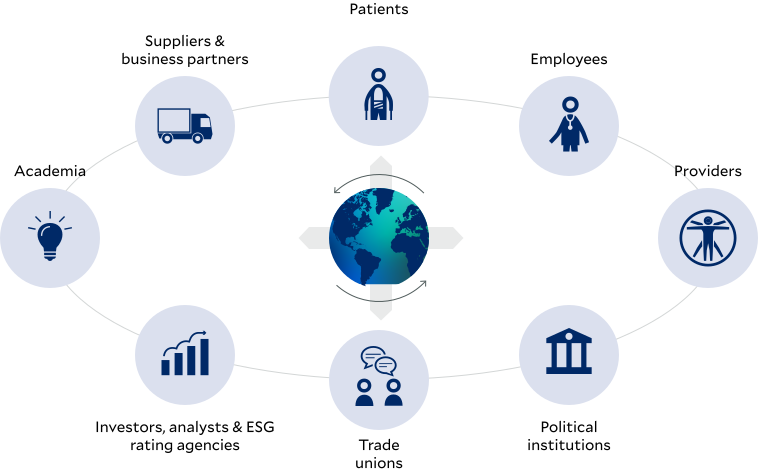
In addition to these stakeholder groups, other third parties, such as patients’ relatives, and professional groups that have a connection to Fresenius’ products and services, may also represent an important target group, depending on the circumstances. For better readability, this report therefore does not provide a full list of relevant stakeholder groups for individual topics and, where appropriate, uses third parties as a collective term.
Stakeholder dialogue in all areas
Fresenius engages with the stakeholders through a variety of channels. The corporate functions at Fresenius primarily focus on stakeholders who are relevant to the Group as a whole. In particular, Fresenius SE & Co. KGaA is continuously in dialogue with investors and analysts due to its stock market listing. The Operating Companies actively engage with patients, employees, customers, and regulatory authorities, among others.
For the integration of affected stakeholders into the operating activities, Fresenius considers, for example:
regular communication with authorities,
an analysis of the questions from shareholders at the last Annual General Meeting,
findings from existing due diligence processes and risk assessments in the area of quality,
criteria of ESG ratings that are highly relevant to the capital market,
insights from the informational needs of investors in collaboration with the communication functions in the Group and the Operating Companies,
scientific reports, e.g., for environmental standards, or for exchange in internal specialist committees,
internal employee satisfaction surveys,
dialogues with employee representatives and works councils, as well as,
patient and customer surveys.
In the 2025 reporting year, the Group Sustainability function continued its engagement with internal and external stakeholders as part of the CSRD project. By establishing a reporting governance framework, the project was transitioned into a standardized process for regulatory reporting. This helped consolidate existing insights and further improve knowledge transfer within the company. The new structure defines central functions for the respective topical standards as well as responsibilities.
Another important element of stakeholder dialogues is the active participation in industry and interest groups, as well as exchange with business partners. Fresenius’ employees contribute their expertise to national and international bodies, committees, and associations. In some cases, this is accompanied by industry agreements or commitments. Here, too, the involvement was expanded in the reporting year. The following initiatives and memberships are, for example, of strategic importance:
AMR Industry Alliance – Anti-microbial Resistance Industry Alliance – Member: Fresenius Kabi
ENHA – The European Nutrition for Health Alliance – Member: Fresenius Kabi
IQM – Initiative Qualitätsmedizin – Founding and board member: Fresenius Helios in Germany; active management of expert committees; voluntary commitment to quality principles
Medicines for Europe – Member: Fresenius Kabi; commitment to the Code of Conduct
MedTech Europe – Member: Fresenius SE & Co. KGaA; voluntary commitment to comply with the Code of Conduct
PSCI – Pharmaceutical Supply Chain Initiative – Member: Fresenius Kabi
UN Global Compact – Member: Fresenius SE & Co. KGaA
VCI – German Chemical Industry Association – Member: Fresenius SE & Co. KGaA
Extended information on these memberships can be found on the website.
Fresenius commits to observing the codes and principles associated with the membership in various associations. In addition, all contributions made to healthcare professionals in the companies of Fresenius are disclosed in accordance with the applicable disclosure requirements.
Stakeholder engagement is organized on a topic- and area-specific basis. Responsibility lies with the Group functions and the specialist functions of the Operating Companies. For stakeholders whose engagement is prescribed by regulation, as in the area of drug approval, for example, the affected specialist functions must ensure that appropriate internal guidelines and controls are established.
The exchange in expert committees and the direct interaction with stakeholders is target-group-specific and needs-based. This is to ensure that the insights gained from discussions or other communication formats serve to improve reporting as well as external and internal communication. At the same time, Fresenius wants to maintain the reputation of the company and its Operating Companies. Further information can be found in the topical standard G1 Business conduct, section G1-5 Political influence and lobbying activities.
Depending on their materiality, the results of the exchange with stakeholders can either be incorporated into existing communication and reporting formats or transferred into the strategic design of operational topics. This is done voluntarily. Mandatory adjustments result, for example, from external inspections or audits, which are explained in the topical standard S4 Consumers and end-users, Health and safety section.
The inclusion of the interests and viewpoints of the most important stakeholders is based on existing guidelines and controls as well as established information channels, e.g., patient surveys. Further information on whistleblower systems can be found in the topical standard G1 Business conduct, section G1-1 Business conduct policies and corporate culture, see Whistleblower reporting system. Explanations of patient surveys can be found in topical standard S4, sub-topic Health and safety, combined presentation of sections S4-2 and S4-3, see Engaging with patients.
If the positions and interests of affected stakeholders represent material positive or negative impacts, risks, or opportunities, these are documented in the internal process and control structure and communicated to the Management Board and the Supervisory Board in accordance with the prescribed reporting processes. Examples include regulatory and health policy trends or geopolitical changes. Fresenius comments on these at least once a year in its external reporting.
Impact, risk, and opportunity management
Materiality analysis [IRO-1] Description of the process to identify and assess material impacts, risks, and opportunities
Since 2023, Fresenius has been conducting a double materiality assessment to identify the Impacts, Risks and Opportunities (IROs) within the Group’s own operations as well as along the value chain. This process ensures that the sustainability topics and corresponding reporting content that are material for Fresenius and its stakeholders are identified.
To achieve this, the company has developed and documented a structured process that involves a defined group of internal experts from Group or segment functions. The process typically starts in the first half of the reporting year and is completed by year-end. The respective results are presented to the Sustainability Board member and, following its approval, to the Audit Committee.
In addition to a comprehensive double materiality assessment, which is typically conducted every three years, Fresenius reviews the material IROs annually. The objective is to verify the relevance, completeness, evaluation, and reportability of the IROs and to refine their descriptions.
Furthermore, the ongoing transformation of the company entails strategic and operational changes. Therefore, another goal of the in-depth analysis in 2025 was to align the results of the materiality assessment with the corporate strategy and to reflect changes in the upstream and downstream value chain. The review was carried out based on the ESRS-compliant methodology from the previous year, including stakeholder engagement, assessment logic, and threshold definition.
In line with the principle of double materiality, Fresenius has considered sustainability from two different perspectives:
Impact materiality: includes all potential and actual positive and negative impacts of Fresenius’ operations on stakeholders, including social and environmental impacts.
Financial materiality: includes all financial risks and opportunities that could affect Fresenius’ future profitability due to sustainability aspects. This encompasses the financial performance, results of operations, cash flows, access to finance or cost of capital of Fresenius.
Double materiality analysis
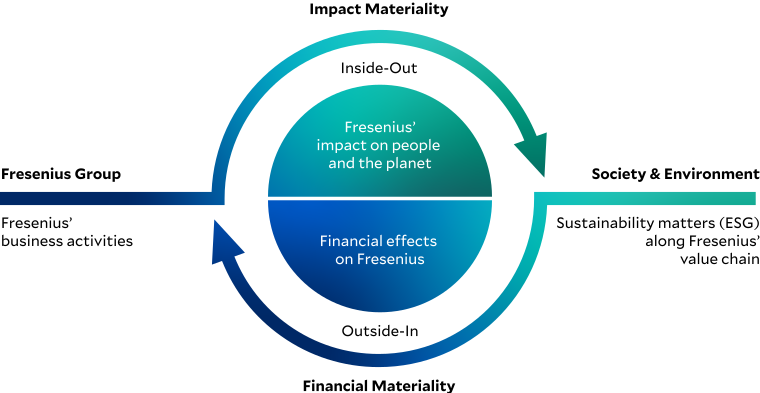
A sustainability aspect fulfills the double materiality criterion if it is material from either or both perspectives.
The process of identification of the material sustainability aspects for Fresenius, according to the double materiality procedure, is the responsibility of the Group Sustainability function. The recommendations of the EFRAG Implementation Guidance were used and adapted to the specific circumstances of Fresenius, as described below.
Process of double materiality analysis in accordance with CSRD
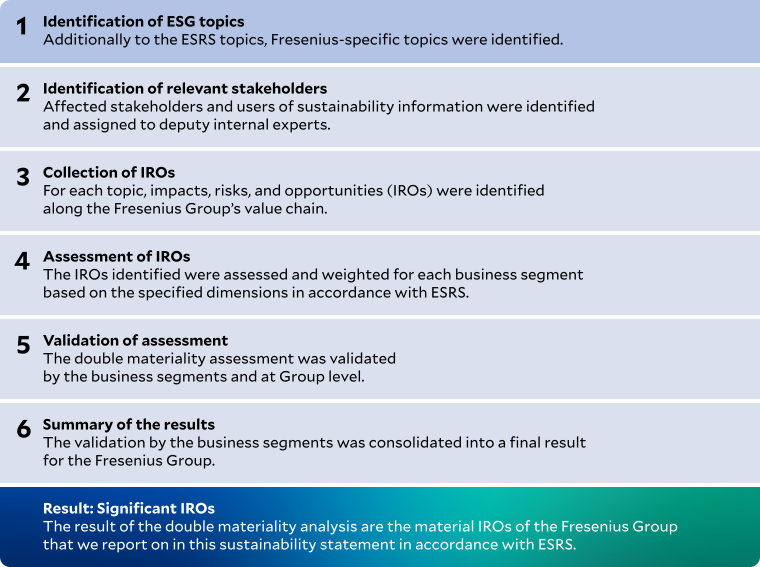
In the first step, potentially relevant topics were selected based on the sustainability aspects defined in ESRS 1 AR 16. In addition, Fresenius-specific and competition-specific topics were taken into account. Frameworks such as SASB (Sustainability Accounting Standards Board) and the requirements of the Carbon Disclosure Project (CDP) were also included.
Fresenius then defined the relevant stakeholders and users of sustainability information for the identified topics. In order to cover as many topics as possible, Fresenius examined whether internal representatives, rather than external stakeholders (according to ESRS 1 AR 8), are better suited to bundle external stakeholder expectations and evaluate them for the analysis. Therefore, experts with in-depth knowledge of both the company’s own operations and the upstream and downstream value chain were selected, who regularly interact with respective stakeholders as part of their jobs. Fresenius used a stakeholder matrix to take into account the perspectives and interests of the relevant stakeholders; external stakeholders or affected communities were not directly involved. Relevant stakeholder groups are listed in section Stakeholder and partnerships in this standard. Consultations were conducted where dialogue formats existed, such as the Annual General Meeting, the Employee Engagement Index, or the structured dialogue as described in topical standard S1 Own workforce. In addition, a stakeholder mapping was used to involve the Operating Companies in the assessment. No further consultations took place. The Group Sustainability function reviewed the results to ensure that the interests of the relevant stakeholders were duly considered in the identification, assessment, and evaluation of the IROs.
Fresenius identified and assessed the negative and positive impacts of the business activities on the environment and society, as well as the financial risks and opportunities for the relevant sustainability aspects along the value chain. In doing so, the company took into account both IROs in which the Group is directly involved through its own business activities, as well as those arising from direct and indirect business relationships within the upstream and / or downstream value chain and of which it becomes aware through ongoing dialogues and exchange formats.
The IROs were collected and evaluated on a gross basis, i.e. the evaluation was carried out independently of existing mitigation measures. This prevents material sustainability aspects that are already successfully mitigated from being classified as non-material.
In order to assess material impacts, Fresenius first determined their severity level in accordance with regulatory requirements. To do this, the following three dimensions (according to ESRS 1 section 45) were considered and were weighted with a factor depending on their severity and relevance. In deviation from the EFRAG Implementation Guidance, a four-level scale was applied to weight material impacts:
-
Extent: measures how severe the negative or positive impact is (Scale: 1 low, 2 medium, 3 significant, 4 severe / very positive)
-
Scope: indicates how widespread the impact is (Scale: 1 Concentrated / Limited, 2 Medium, 3 Broad, 4 Global / Comprehensive)
-
Irreversibility: records the extent to which negative impacts can be mitigated and the effort involved in doing so (Scale: 1 Very Easy / Short-Term, 2 Difficult / Medium-Term, 3 Very Severe / Long-Term, 4 Irremediable / Irreversible)
For impacts, a maximum value of 12 was defined based on the underlying calculation logic. For financial materiality, a maximum value of 4 applies.
Fresenius assesses the severity of negative impacts on the basis of all three dimensions. Positive impacts are only assessed on the basis of extent and scope, since no remediation is required and therefore irreversibility is not relevant for the assessment.
Furthermore, a distinction was made between potential and actual impacts. Actual impacts are those that have already occurred or have not been remedied by missing or ineffective corrective measures. Potential impacts may possibly or conceivably occur in the short-, medium-, or long-term in the future, whereby the probability of occurrence within a 10-year period is also assessed. A severe impact, such as a human rights violation, is considered material for Fresenius, irrespective of the probability of occurrence.
To assess the materiality of an impact, the factors of severity in the form of extent, scope, and irreversibility are summed and then multiplied by a factor for probability of occurrence in the case of potential impacts. If the result exceeds half of the possible total value, an impact is considered material and is included in the report. The criteria were applied in accordance with ESRS 1 section 3.4 Impact Materiality.
In identifying, assessing, prioritizing, and monitoring the potential and actual impacts of Fresenius on people and the environment, the business model and geographical circumstances were taken into account. Assumptions were included as follows in the aspects:
-
The Group function Risk & Integrity is responsible for risk management and the internal control system. It supports the Management Board in designing and maintaining appropriate and effective internal control and risk management activities by coordinating, monitoring and reporting on these processes. Findings from this functional monitoring of the risk management and internal control system are addressed by appropriate measures. As part of the materiality analysis, relevant criteria were used for Fresenius to assess materiality, including location, business activity, and sector affiliation. In addition to the potential and actual impacts, risks and opportunities were also considered. The results are explained in the topical standards. The criteria for assessing impacts, risks, or opportunities were always identical. With regard to compliance and corporate policy, for example, Fresenius additionally used the criteria from the compliance management system, which are described in the topical standard G1 Business conduct, Risk management section.
-
The materiality analysis focused on manufacturing operations, as these are most likely to cause environmental pollution. In addition, applicable European laws were considered and used to assess the impact.
-
Based on a prior water stress analysis, areas were identified where water is essential for Fresenius’ business activities. In addition, process experts evaluated the respective activities and products of Fresenius and their potential impact on marine resources.
-
In the reporting year 2025, Fresenius also systematically analyzed its dependencies on natural resources as well as the potential impacts of its own operations and the upstream value chain on ecosystems. The dependency on water treatment systems identified as part of the biodiversity analysis was incorporated into the updated assessment of the IROs.
-
With regard to resource utilization and the circular economy, process experts from the respective Operating Companies have evaluated the relevant resources. In addition to own operational activities, the greatest resource utilization at Fresenius is associated with the upstream value chain.
-
The consideration of the upstream and downstream value chain was only possible to a limited extent, as not all of the suppliers’ and partners’ production sites are fully known to Fresenius. Therefore, assumptions were made about the severity and, where necessary, the likelihood of occurrence. In addition, applicable European laws were used to estimate the impacts.
As part of the financial materiality analysis, sustainability aspects were analyzed in terms of their potential to positively or negatively influence the company’s value and financial development. These risks and opportunities can affect the financial performance, results of operations, cash flows, access to finance, or cost of capital of Fresenius.
To determine whether risks and opportunities related to a topic are material for Fresenius, the magnitude of the financial effects were considered first. In this context, risks and opportunities can arise from dependence on economic, natural, and social resources. As a company, Fresenius relies on these resources being available at reasonable prices and in sufficient quality. Fresenius divides the triggers for financial effects into two categories:
-
They may affect Fresenius’ ability to continue to use and obtain the resources necessary in its business process, as well as the quality and pricing of these resources.
-
They may affect Fresenius’ ability to continue to rely on the relationships needed for its business process under acceptable conditions.
To assess the extent of the financial impacts of the identified risks and opportunities, ranges were defined for both the Group as a whole and the Operating Companies that reflect the risks and opportunities in monetary terms, and each was assigned a weighting factor. In doing so, the scales and thresholds from Fresenius’ risk management were used. This is to ensure that the findings of the double materiality analysis can be integrated into the Group risk management and associated management processes.
In the following, the probability of financial risks and opportunities occurring was assessed. In contrast to the extent of the financial effects, Fresenius took into account existing risk mitigation measures that influence the probability of occurrence (net view). In addition, it was determined at which stages in the value chain the risks and opportunities arise.
To assess the financial materiality of an issue, the factor for the extent is multiplied by the factor for the probability of occurrence. If the result exceeds a threshold of at least half of the maximum value, an issue is considered material and is included in the reporting.
Fresenius considered the identification, assessment, prioritization, and monitoring of risks and opportunities that have or may have financial effects on the basis of the following aspects:
-
in which context the impacts and dependencies on the operating business, the relevant markets, or the overarching risk criteria according to the risk management stand, for example, impacts were considered to lead to potential risks or opportunities while risks and opportunitities may arise irrespective of impacts,
-
how the probability, extent, and nature of the impacts of the identified risks and opportunities is assessed, and
-
how sustainability risks relate to other risks, whether they are mutually dependent, whether they should be considered separately, or whether they occur upstream or downstream. Fresenius assesses, evaluates and documents all identified risks based on unified internal provisions, irrespective if they are financial, operating or sustainability risks.
The results of the materiality analysis and the resulting disclosure requirements according to ESRS were subjected to various internal controls. These included validation by the respective Group function or Operating Companies, review by the Group Sustainability function, and final approval by the Steering Committee.
Risk Management was involved in the entire materiality process as well as in the review conducted in 2025. Thus, Fresenius aims to ensure that the identification, assessment and management of impacts and risks is integrated into the Group risk management process.
In the update of the materiality analysis in 2025, key internal stakeholders participated to support the process: All Group functions responsible for material topics were consulted during the 2025 update regarding opportunities, future strategy, current developments, and stakeholder expectations. These insights partly changed the prioritization of topics but contributed to supplementing the information presented in this report. Employee representatives were previously informed about the analysis and preliminary results in accordance with CSRD 2022 / 2464 section 19a (5) and the draft CSRD Implementation Act.
The review of the materiality analysis in 2025 revealed that some IROs from the initial double materiality assessment were repetitive in content or described existing management approaches without sufficiently addressing the underlying impact, risk, or opportunity. Already in the 2024 report, Fresenius had initiated first consolidations within the IRO descriptions to avoid redundancies. Building on these insights, the IROs were individually analyzed and refined in the reporting year 2025 to enable subsequent aggregation, reassessment, or categorization. This approach is illustrated by the following examples:
-
In topical standard S2 Workers in the value chain, a positive impact was removed from the IRO inventory, as no evidence for the existence of this impact could be determined based on the risk analysis, described in the topical standard. All IROs in topical standard S2 Workers in the value chain were revised on the basis of the risk analysis.
-
In the company-specific standard G-Cybersecurity, a positive impact was reclassified as a financial risk to transparently present the existing operational risks and the associated financial effects. The previously presented positive impact corresponds to the management approach of Fresenius and is therefore not considered as an impact.
-
Furthermore, in topical standard E3 Water and marine resources, two negative impacts were aggregated, both relating to increased water demand, and are thus reported under a joint management approach.
In principle, some previously presented positive impacts were reassessed as remedial measures aimed at mitigating existing risks or negative impacts. The refinement and recategorization of material IROs therefore led to a reduction in positive impacts and, conversely, to the inclusion of risks already documented in internal risk management. This approach was applied consistently across all topical standards and company-specific standards. Overall, the number of positive impacts was significantly reduced and now falls below the total number of negative impacts or risks. Insofar, the overall number of IROs was substantially reduced. The outcome of the 2025 review is a clearer, more focused presentation of the IROs within the topical standards of the Sustainability Report and a sharper link to the management approaches. This did not result in any changes to the Group approach or segment approach in any topical standard. The changes implemented in the topical standards are standard updates reflecting the reporting year 2025.
A new feature is the introduction of a tabular presentation of the IROs, replacing the previous purely textual consolidation from the 2024 report and enhancing transparency for external stakeholders. An overview of the material IROs can be found at the end of this standard and in detail at the beginning of each topical standard. In topical standard S1 Own workforce, due to interface topics, a specific allocation of management approaches to the respective IROs is emphasized.
As a result of the update of the materiality analysis, changes occurred regarding material IROs and the corresponding disclosure requirements: no IRO related to other work-related rights of own workforce was assessed as material. Therefore, this sub-topic, including the sub-sub-topics Adequate Housing, Child Labor, and Forced Labor, will no longer be reported under topical standard S1 Own workforce. The Group approach to Privacy remains unchanged and is described in topical standard S4 Consumers and end-users, which also covers own workforce. Likewise, no material IRO was identified for the sub-sub-topic Social Protection. Accordingly, disclosure requirement S1-11 will no longer be reported. Furthermore, no IRO related to Supplier Relationships, including Payment Practices, was assessed as material. Disclosure requirements G1-2 and G1-6 will therefore no longer be reported. Due to a new material risk concerning product safety and supply risks in connection with compliance with regulations in global healthcare markets, corresponding company-specific disclosures will be provided in the reporting year (Section Resilience and compliance in global supply chains, topical standard G1).
In the 2025 Sustainability Report, the IROs are addressed more clearly within the reporting on the respective policies, actions, and targets. This enhances traceability and transparency for external stakeholders and contributes to a greater understanding of how sustainability aspects impact operational business.
In 2026, Fresenius will again review the timeliness of the materiality analysis. The review will consider the extent to which a refinement of company-specific topics serves transparency and understanding of management approaches, or whether company-specific disclosures currently reported separately should be integrated into ESRS topical standards. A full double materiality assessment will not be conducted before 2027.
Climate-related scenario analysis [E1 IRO-1] Description of the processes to identify and assess material climate-related impacts, risks, and opportunities
As part of the double materiality analysis, Fresenius analyzed its own operations as well as the upstream and downstream value chain for potential and actual impacts on climate change. The Group’s greenhouse gas accounting, which is based on the internationally recognized Greenhouse Gas (GHG) Protocol methodology, forms the basis for assessing the impact on climate change. In doing so, direct and indirect emissions (Scope 1 and 2) are considered as well as indirect emissions in the upstream and downstream value chains (Scope 3). The GHG emission sources are reported in topical standard E1 Climate change, section E1-6 GHG emissions. Based on Fresenius’ current operating model, alternative future GHG emission sources are not likely to occur as the Group plans to continue operating in the healthcare sector. The assessment of actual and potential impact on climate change has been conducted in the materiality assessment.
Fresenius considers climate risks in its risk management system. In the 2024 reporting year, the Group adjusted the climate risk analysis to meet regulatory requirements. For climate risks, Fresenius has reevaluated the time horizons, scenarios, risk classification, and level of assessment. This enables Fresenius to better identify and assess physical risks as a result of climate change, transitional risks resulting from the transition to a low-carbon economy, and opportunities in own business and along the value chain. The climate scenario analysis was conducted by Group Sustainability in collaboration with the Insurance department and Risk Management. In doing so, the functions followed the recommendations and risk catalog of the Task Force on Climate-related Financial Disclosures (TCFD), now under the International Financial Reporting Standards Foundation (IFRS).
As part of the analysis, Fresenius looked at its production sites and hospitals based on their geocoordinates and, with the help of an external tool, considered the acute and chronic physical climate risks over different time horizons and with regard to different scenarios. Hereby, climate-related hazards were identified for assets varying by horizon, scenario, and location. The identified hazards include temperature-related, wind-related, and water-related acute and chronic climate hazards. The likelihood and magnitude were analyzed by the external tool, the duration was selected per hazard.
Fresenius has analyzed material locations for business activities in terms of the probability of a climate risk occurring in the following different scenarios of the Intergovernmental Panel on Climate Change (IPCC) (see IPCC AR6 Report (2021)):
SSP1-2.6: The optimistic social development path expects a limitation of global warming to 1.8°C by 2100 (best-case scenario).
SSP2-4.5: With the business-as-usual scenario, a 2.7°C limit is expected by 2100.
SSP5-8.5: In the worst-case scenario, a temperature increase of 4.4°C by the end of the century is to be expected.
By considering these three IPCC scenarios, Fresenius has fully covered the extremes in the analysis. This allows the Group to minimize uncertainties if the same results are achieved despite different assumptions.
In addition to considering the IPCC scenarios, Fresenius has identified adverse financial effects for the Group in connection with physical climate risks. Short-, medium-, and long-term time horizons were considered and the results were tested in accordance with the approaches of the internal risk management system. The time horizons chosen are aligned with those used for reporting key financial figures:
Short (1–3 years): includes the current budget period
Medium (2030): includes the projected budget period of 4 to 10 years and includes the climate target for 2030
Long (2050): includes the planning horizon for the climate targets up to 2040 and 2050 and the weighted average lifetime of buildings (20 years), machinery and equipment (13 years), and customer relationships (18 years)
Fresenius has evaluated the financial risks to its business capabilities based on the scope, duration, and extent of the climate risks. Due to the large number of suppliers and the limited overview of their production sites, the Group modeled and analyzed the relevant regions with the help of the Scope 3 data. Since the suppliers are located in similar regions, i.e. Fresenius locations, they were evaluated equally according to regional allocation. If the risk was high to extreme and there was a business interruption that exceeded the threshold of the risk management system, this location was evaluated. Fresenius analyzed the material locations in terms of their resilience, taking into account existing or planned adaptation and mitigation measures.
Own business activities are affected not only by physical risks but also by transition risks. In this context, various drivers are considered: developments affecting regulation, the energy industry, society, technology and innovation, as well as climate-related investments. The selection of drivers is based on business relevance, the availability of information, and the aim to ensure a multifaceted perspective.
Specifically, own business activities are affected by the transitional risk of higher pricing of greenhouse gas emissions. The sites that are currently covered by an emissions trading system were considered for the assessment. The future availability and pricing of the certificates were estimated. The risk was evaluated on the basis of the Net Zero Emissions by 2050 Scenario (NZE) of the International Energy Agency (IEA). According to the IEA, the NZE is the only scenario that will limit global warming to 1.5°C by 2050. The analysis is based on a long-term time horizon up to 2050 and a medium-term horizon up to 2030.
Fresenius has not identified any of the Group’s business activities as being inconsistent with the transition to a carbon-neutral economy. However, investments are needed to contribute to this transition.
In the financial report, no climate-related assumptions are made regarding the valuation of assets in the consolidated financial statements.
Resilience analysis
In conjunction with the scenario analysis, the resilience analysis is an important tool that Fresenius uses to analyze how resilient its strategy and business model are in terms of physical and transition climate risks. In 2024, the Group evaluated its production sites and hospitals in this regard in various scenarios and time horizons as part of the climate-related scenario analysis as described above. The upstream and downstream value chain was considered using an aggregated view. A detailed assessment of the value chain was not possible due to the multiplicity of suppliers and the required exact location. For a pre-screening Fresenius used the EEIO (Environmentally-Extended Input-Output)-data from the Scope 3 assessment where raw material sourcing per region is indicated. Fresenius and its suppliers are present in similar regions, leading to the conclusion that comparable physical climate risk may impact the supply chain. The resilience analysis was limited to own operations and not conducted for the up- and downstream value chain due to the limited available information on location and adapting and mitigating measures in place.
Resilience analysis¹
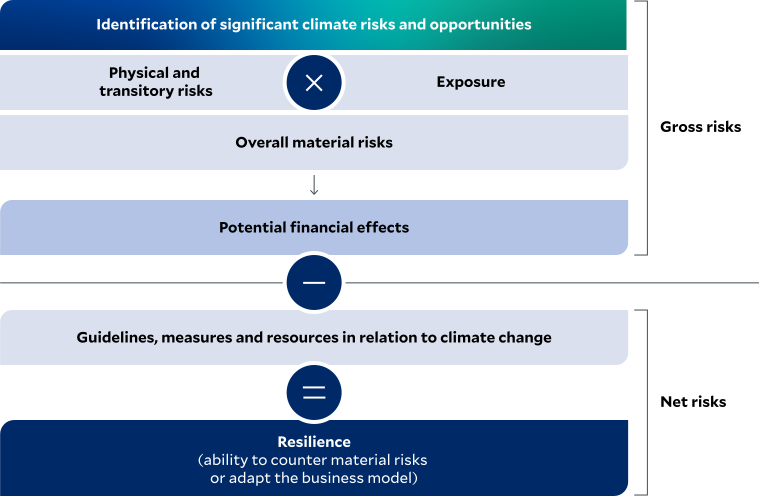
With regard to the transition to a low-carbon, resilient economy, Fresenius has included the following critical assumptions in the analysis:
Energy efficiency: Increasing energy efficiency and reducing energy consumption supports the objectives of Fresenius. Targeted measures can lead to energy and cost savings.
Renewable energies: The significant increase in renewable energies supports the goals of the Group and enables the availability of these energy sources through corresponding investments, the expansion of the energy grid, and the decarbonization of the supply chain.
Economic growth: The transition to a low-carbon and resilient economy is leading to a transformation of workplaces, for example through digitalization. This is accompanied by changing demands on employees.
Technologies: From a business perspective, the development of climate-friendly and scalable technologies is essential to enable the electrification and use of renewable energies, for example through long-term energy storage.
In addition, Fresenius has considered existing or planned adaptation and mitigation measures when assessing physical and transitional climate risks. These climate protection measures are described as part of the transition plan in the topical standard E1 Climate change in section E1-3.
The resilience analysis is based on a scenario analysis, which is inherently subject to uncertainty and does not represent a forecast. The analysis is based on models of past climate data, which is why no acute risks, no new risks or developments caused by climate change, and their dependencies can be fully included and evaluated. Mathematical assumptions were made behind each model to describe possible scenarios. Fresenius wants to continuously evaluate and optimize data quality in risk assessment, as well as the evaluation and effectiveness of measures.
Based on the results of the analyses carried out, Fresenius has determined that locations and supply chains are subject to physical climate risks (mainly heat stress, water stress, flooding), but that these do not currently require Fresenius to adapt its business model. The Group takes strategic decisions related to environmental issues, taking economic aspects into account. Fresenius considers climate risks as a sub-aspect. Part of the operational units already implemented measures to adapt to climate change, others are planning to take appropriate short-, medium-, and long-term measures, such as installing flood protection, reducing water consumption in water-stressed areas, or having emergency plans for earthquakes. In this way, the business model can become even more resilient through climate protection measures – however, due to the unpredictability of all climatic changes, Fresenius cannot fully protect itselve from physical climate risks. Fresenius makes investments to make production facilities and healthcare facilities more modern, efficient, and climate-friendly. Fresenius is constantly reviewing the extent to which changes to its product and service portfolios are necessary.
Sustainability is a material and integral part of the corporate strategy. To pursue this in a focused way, Fresenius analyzes risk-bearing assets and evaluate investment decisions for climate protection measures based on their effectiveness in achieving the goals.
Report contents [IRO-2] Disclosure requirements in ESRS covered by the undertaking’s Sustainability Statement
The table in section Downloads shows all data points in accordance with ESRS 2 Annex B that arise from other EU legislation and where they can be found in this Sustainability Report. Non-material data points are marked accordingly.
No thresholds were applied when determining the material information to be disclosed in connection with the impacts, risks, and opportunities assessed as material, but instead a qualitative mapping was performed. Based on the material sustainability aspects and in line with ESRS 1 Appendix E, the material disclosure requirements and data points were determined. In this process, the criteria listed in ESRS 1 paragraph 3.2 were taken into account.
The index in section Downloads shows the disclosure requirements reported in accordance with the ESRS.
Impacts, risks, and opportunities [SBM-3] Material impacts, risks, and opportunities and their interaction with strategy and business model
The material impacts, risks, and opportunities (IROs) identified in the materiality analysis are described in the respective topical standards. The positioning of the IROs along the value chain is also shown in the graphic Fresenius value chain.
The identified IROs are related to the business model and have an impact on both people and the environment. In the own operations, the IROs arise, on the one hand, from the production processes and the associated upstream procurement processes. On the other hand, they affect consumers and end-users of products or services, in particular patients that are treated in Fresenius’ own clinics or who use the products outside of the healthcare facilities. Consumers and end users are individuals whom Fresenius treats in the hospitals, who apply the products to patients – such as healthcare professionals, i.e., physicians, nurses, or pharmacists – or who receive the medicines Fresenius offers as part of their treatment plan. No distinction is made between different groups of patients. Medical services in Fresenius’ facilities or with Fresenius’ products aim to improve the health of patients. Nevertheless, providing medical care also entails risks – the products can be harmful to consumers and end users if misused or abused and / or increase the risk of illness. Patients and healthcare professionals therefore rely on accurate and accessible product- or service-related information such as product labeling, package inserts, and patient information. In addition, Fresenius provides training materials for healthcare professionals to ensure correct and effective use and to avoid potential or adverse side effects. Consumers and end users may be particularly vulnerable to health impacts. Responsible marketing, advertising, and distribution are therefore governed by external regulatory requirements, especially in the Healthcare industry, which Fresenius takes into account when designing internal policies.
Fresenius also sees impacts on its own workforce. Own workforce includes both employees with an employment relationship with Fresenius and non-employee workers. Fresenius engages various groups of employees and non-employee workers. The actual or potential impacts, opportunities, and risks Fresenius has identified generally cover all groups. Additional explanations of material impacts on specific groups are provided where they have been identified for particular areas of activity. As part of the materiality analysis, the Group did not identify any new workforce groups that are more affected or could be more affected by negative impacts, risks, or opportunities than the rest of the workforce. Where workforce groups exist that are particularly vulnerable and require protection, for example through legal requirements to be ensured by the company, management approaches or policies had already been established prior to the materiality analysis.
The explanations in Topical Standard S1 Own workforce take into account the criteria mentioned in ESRS S1.24 b): race and ethnic origin, skin colour, gender, sexual orientation, gender identity, disability, age, religion, political opinion, national descent or social origin, as well as other forms of discrimination that fall under EU law and national law.
Furthermore, the identified IROs also relate to workers in the value chain. In analyzing human rights impacts, Fresenius places particular focus on those segments of the value chain located in countries and industries with potentially high human rights risks and associated potential negative impacts on workers. This includes, for example, discrimination against individuals or groups as well as lack of occupational safety measures for workers in the upstream value chain. This encompasses both workers operating at the sites who are not directly part of the Group and workers employed by direct suppliers and deeper tiers of Fresenius’ upstream value chain. A particular challenge can be that negative impacts occur deep within the value chain without direct or visible links to the business activities. Fresenius therefore strives to continuously increase transparency in the value chains and to identify the types of workers that may be materially affected by its business activities. In doing so, Fresenius plans to focus on those workers who, due to their inherent characteristics or specific circumstances, are particularly vulnerable to negative impacts.
The business model and Group strategy are characterized by the necessity for sustainable action. Fresenius therefore integrates the identified impacts, risks, and opportunities into its business model and Group strategy. Further information on the approaches pursued can be found in the respective topical standards.
In addition to the actual impacts, such as the change in job profiles due to the increasing use of digital solutions or applications, Fresenius sees demographic change, the associated change in disease patterns, and the future demands in healthcare markets as significant impacts that could influence future business activities as well as the value chain. Information is provided in topical standard S1 Own workforce, section S1-1 Approach. Fresenius also reports on its approach regarding health and safety in topical standard S4 Consumers and end-users. For example, rising costs, increasing regulatory requirements, and innovative treatment options present new challenges and opportunities that are taken into account in the strategic development, e.g., in innovations or digitalization.
During the reporting year, there were no further events in connection with the identified impacts, risks, and opportunities that led to material financial effects. No material adjustments to the assets and liabilities recognized in the associated financial statements are expected in the next reporting year either. The Combined Management Report contains additional information on opportunities and risks as well as a detailed description of the risk management and internal control system.
Only by firmly integrating sustainability into the business strategy, Fresenius can remain competitive and resilient in the long-term while continuing to provide high-quality healthcare. The measures Fresenius takes to address the identified IROs in the respective topical standards or company-specific standards, and how Fresenius designs each approach, are explained in detail in the topic-specific sections of the environmental, social, and governance standards. You will also find details of the resilience analysis in this standard. The periods Fresenius uses are also. They are aligned with those used for the disclosure of key financial figures. The responsible entities must not only identify possible risks, but also design internal processes in such a way that business operations can be resumed quickly after an incident or, in the best case, are not disrupted at all.
The IROs are assigned to the topic-specific ESRS and the sub-topics listed in ESRS 1 and are covered by the ESRS disclosure requirements. In addition, Fresenius has identified company-specific topics (Cybersecurity, Digital transformation, Innovation), which are reported on in accordance with the minimum disclosure requirements. As part of the annual update of the double materiality analysis, Fresenius reviews whether company-specific disclosures can be integrated into the disclosures required under ESRS.
Information in accordance with the HGB [ESRS 1.114]
This Sustainability Report was prepared in accordance with the ESRS and also meets the regulatory requirements for a separate Group Non-financial Report in accordance with Sections 315b to 315c of the German Commercial Code (HGB). For the preparation of the Sustainability Statement, the ESRS were considered as possible framework. Due to the global business activities and the expected implementation of the European Corporate Sustainability Reporting Directive (CSRD) into national law, Fresenius decided to use the ESRS as a framework within the meaning of Section 315c HGB in conjunction with Section 289d HGB and to apply these in full. This led to a change in the consistency principle of sustainability reporting in 2024 in order to transfer the new regulation into the reporting processes before implementation in national law and to create transparency and comparability with the reports of other companies. The report is published annually.
In accordance with Section 315c HGB in conjunction with Section 289c HGB, the reporting company must comment on legally defined sustainability aspects. The following presentation of the requirements according to the HGB with parallel application of the ESRS is intended to facilitate the understanding of the reconciliation.
The criterion of materiality is of particular importance in sustainability reporting under the ESRS, as not all aspects of sustainability are to be included in sustainability reporting. To this end, companies must carry out a materiality analysis. Both the material impacts of the company’s activities on people and the environment (materiality of impacts) and the material impacts of sustainability aspects on the company (financial materiality), i.e. how, for example, climate change affects (or may affect) the company’s development, performance, and position, must be reported. This is known as the principle of double materiality. You can find more information on this within this standard in section IRO-1 Materiality analysis.
The materiality analysis following the ESRS requirements is used for ensuring that the sustainability report contains the relevant information for a non-financial Group statement that is necessary for an understanding of the course of business, the business results, the situation of Fresenius, and the impacts of its activities. This also applies for the update of the materiality analysis based on ESRS, conducted in 2025 which led to a reduction in the number of IROs. Accordingly, it can be assumed that a topic that is immaterial under ESRS is also not reportable under Section 289c (3) HGB.
A description of the business model can be found within this standard in section SBM-1 The business model and value chain.
Environmental matters in accordance with Section 315c HGB in conjunction with 289c (2) No. 1 HGB are reported by Fresenius applying the ESRS topical standards E1, E2, E3, and E5. They relate, among other things, to greenhouse gas emissions, air pollution, water consumption, and resource consumption.
Employee matters pursuant to Section 315c HGB in conjunction with Section 289c (2) No. 2 HGB are reported by the Fresenius Group applying the ESRS topical standards S1 and S2. This includes information on management concepts and measures taken to ensure gender equality, working conditions, implementation of the fundamental conventions of the International Labour Organization, respect for the rights of employees to be informed and consulted, social dialogue, respect for trade union rights, health protection, and safety in the workplace. In the topical standard S2, Fresenius also addresses employee concerns in the value chain.
The topical standards S1 Own workforce, S2 Workers in the value chain, and S4 Consumers and end-users also cover social matters in accordance with Section 315c HGB in conjunction with the Section 289c (2) No. 3 HGB, e.g., dialogue formats, whistleblower systems, and the protection of patients.
Respect for human rights in accordance with Section 315c HGB in conjunction with Section 289c (2) No. 4 HGB is part of topical standard S2 Workers in the value chain, whereby further explanations in other topical standards refer to this standard accordingly.
The fight against corruption and bribery in accordance with Section 315c HGB in conjunction with Section 289c (2) No. 5 HGB is part of the explanations in topical standard G1 Business conduct. Here, for example, Fresenius explains the existing instruments for combating corruption and bribery.
The matters to be reported in accordance with the HGB are fully covered through the disclosure requirements in accordance with the ESRS topical standards. The topical standards also include references to the amounts reported in the Group financial statements and additional explanatory notes on key actions related to sustainability matters, if necessary.
In the reporting period, no material non-financial risks were identified and reported in accordance with Sections 315c HGB in conjunction with Section 289c (3) No. 3 and 4 HGB taking into account mitigating risk management measures (net view), that are linked to the business activities, business relationships, products, or services and that are very likely to have or will have a severe negative impact on the aforementioned non-financial aspects or business activities. The Combined Management Report in the Annual Report contains additional information on opportunities and risks as well as a detailed description of the risk management and internal control system.
The most significant non-financial performance indicators (compensation-related indicators) that are relevant to business activities are listed in this standard and remain unchanged from the previous year. The explanations can be found in the respective topical standards. Additional information can be found in the Outlook section of the Combined Management Report.