

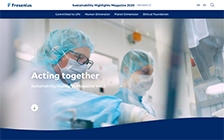

Acting together
The motto of this Highlights Magazine represents an attitude that sees sustainability as a shared task for the people at Fresenius. It emphasizes our desire to take responsibility in the areas where we can make a difference together. The focus here is on our hospital operations and the production of healthcare products.
Our Sustainability Framework
Click for more information
Our sustainability ambition in detail

Our Committed to life promise underlines our mission: to save lives and improve patients’ health and quality of life. It guides our day-to-day actions and shapes our understanding of how we see sustainability as part of our social responsibility.

At the heart of our business activities are people. We support patients in different stages of their lives – sometimes even for a lifetime. In doing so, we meet them on equal terms, treating them with respect and understanding their needs. Our healthcare products and services give them access to high-quality care. Digital and innovative treatment services help us to support people outside of traditional care structures – at home, for example, or with even more effective and affordable therapies.
At the same time, our attention is focused on those who make all this possible: our employees. They make a valuable contribution day after day with their dedication – whether in direct contact with patients or behind the scenes. We want to offer them a working environment that recognizes their efforts while fostering their development.

As a healthcare company, we operate in a unique space where there is a tension between wanting to do our best to minimize any potentially adverse impact on the environment and remembering never to lose sight of the strict requirements governing patient safety. Our aim is to promote human health while continuing to reduce our environmental footprint.
People need a healthy home – now and in the future. By reducing the environmental impact of our activities, we want to play our part in mitigating climate change and conserving natural resources.
Detailed information on our environmental targets, measures, and KPIs can be found in our audited Sustainability Statement 2025.

We are guided by the Fresenius Principles in everything we do. Together with our quality standards and our clear code of conduct, processes, management systems, and controls, they lay the ethical foundations for helping people to act with integrity within the company. We consider it an integral part of our responsibility to respect human rights.
Detailed information on targets, frameworks, measures, and KPIs can be found in our audited Sustainability Statement 2025.
How we measure ourselves – our sustainability targets and KPIs
We can only improve the things we understand and control. That is why we have set ourselves specific targets and defined strategic KPIs – both for the company as a whole and for the operating companies Fresenius Kabi and Fresenius Helios.
Sustainability targets are also a factor in the variable remuneration of the Management Board and a key element of our business strategy.

Sustainability performance & targets
Click to view the current status of target achievement
Committed to Life
Human Dimension
Patient Centricity

Patient Satisfaction
Fresenius Helios in Spain and Colombia uses the Net Promoter Score (NPS) to measure patient experience in its hospitals and strives to achieve a high score in this metric. The NPS reflects the likelihood of patients recommending the hospital after a hospital contact.
In 2025, the joint NPS was at
with an increase of 2 points compared to the previous year.
Access & Affordability

Patients reached
In 2025, we reached about
patients by providing medicines, medical devices, and nutritional therapies by Fresenius Kabi.

Patients treated
In 2025, about
patients were treated at the hospitals of Fresenius Helios.
Employee Engagement & Development

Employee Engagement Index
Fresenius annually measures how strongly employees identify with the company using the Employee Engagement Index. For 2026, Fresenius aims for an Employee Engagement Index of
Employee Engagement Index
Status as of December 31, 2025:
Employee Engagement Index of
Training Hours
Fresenius wants its employees to develop professionally. By 2030, Fresenius aims to increase annual training hours per employee by
(base year: 2024).
Training Hours
Status as of December 31, 2025:
Increase of annual training hours per employee by
compared to 2024.
Planet Dimension
Decarbonization
Emission Reduction
By 2030, Fresenius wants to reduce total Scope 1 & 2 greenhouse gas emissions in absolute value by 50%; by 2040, Fresenius wants to achieve greenhouse gas neutrality in its own operations (Scope 1 & 2) (base year: 2020). Fresenius aims to reach
along the value chain (Scope 1 to 3) by 2050.
Emission Reduction
Status as of December 31, 2025:
Scope 1 & 2 greenhouse gas emissions compared to 2020.
Water
Water Reduction
By 2030, Fresenius Kabi aims to reduce process water withdrawal at production sites in areas with water stress by
in absolute value (base year: 2023).
Water Reduction
Status as of December 31, 2025:
process water withdrawal at production sites in areas with water stress compared to 2023.
Our Ethical Foundation
Quality Excellence
Medical Outcomes
Fresenius strives to provide high-quality inpatient treatments.
Fresenius Helios in Germany
In 2026, Helios wants to outperform the German national average in more than
of cases.
Fresenius Helios in Spain
In 2026, Quirónsalud aims to be equal or better than the applicable standard of the Agency for Healthcare Research and Quality (AHRQ) or compared to the previous year and aims for a target rate of
Medical Outcomes
Fresenius Helios in Germany
Status as of December 31, 2025:
Above-average quality of inpatient treatments at Helios in
of cases.
Fresenius Helios in Spain
Status as of December 31, 2025:
Quirónsalud achieved a target rate of
Product Quality
Fresenius Kabi aims to achieve an average number of
observations in external inspections and audits.
Product Quality
Status as of December 31, 2025:
observations in external inspections and audits.
Human Rights
Human Rights Violations
In 2025,
severe human rights violations were reported.
Business Ethics
Compliance Management System Maturity
Fresenius tracks the robustness of its Compliance Management System. The company aims to continuously achieve a maturity score of
in the annual self-assessment of the system.
Compliance Management System Maturity
Communication on status of target achievement from fiscal year 2026 onwards.
Detailed information on the targets and KPIs can be found in our audited Sustainability Statement 2025.
Sustainability needs direction – and cooperation
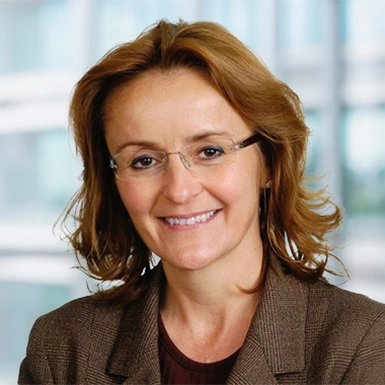
An interview with Sarah Tix, Head of Group Sustainability at Fresenius
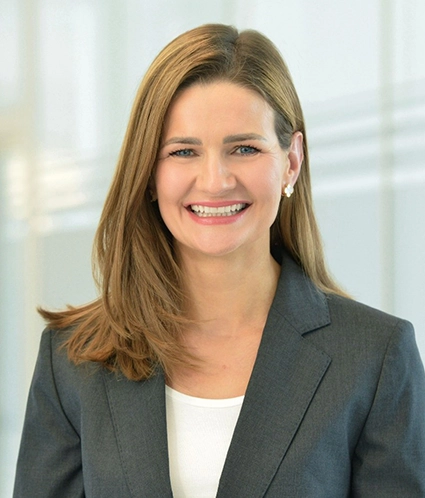
Sarah, what were the main topics addressed at Fresenius in 2025?
Sarah Tix: For us, 2025 was mainly a year marked by concretization: Having defined Group-wide sustainability-related priorities and targets for the first time in 2024 in our Sustainability Framework, last year was about making sustainability more manageable and measurable.
We have now defined three focus topics for each of our three dimensions – the human dimension, planet dimension, and our ethical foundation – making nine in total and enabling us to set clear priorities in terms of content. It was vital to assign responsibility more clearly and make any progress transparent.
We work with the relevant divisions within the Group to devise strategic KPIs and targets for each focus topic. In areas where targets were previously lacking we are currently defining appropriate indicators. For example, a new target focusing on compliance was defined at the beginning of 2026. This allows us to lay the foundations for embedding sustainability even more firmly in decision-making processes and management approaches in the future.
What role do employees play in the ongoing development of sustainable solutions within the company?
Sarah Tix: Our employees are the key to making sustainability effective on a daily basis. At Group Sustainability, we set the direction, framework, and targets – but the real impact is achieved where decisions are made and processes are designed.
We are increasingly seeing teams no longer regarding sustainability as an additional issue, but as part of their professional responsibility – when processes are made more efficient, resources are used more consciously, or existing structures are questioned, for example.
This development shows that sustainability at Fresenius is teamwork – but teamwork with clearly allocated roles. The employees’ contribution is central to translating our strategic targets into concrete progress.
From strategy to practice: The Sustainability Advisory Board’s view
The Sustainability Advisory Board, consisting of Anahita Thoms, Fabian Kienbaum, Dr. Fiona Adshead and Prof. Dr. Judith Walls, accompanied Fresenius in 2025 as the company further integrated sustainability into its core business processes.
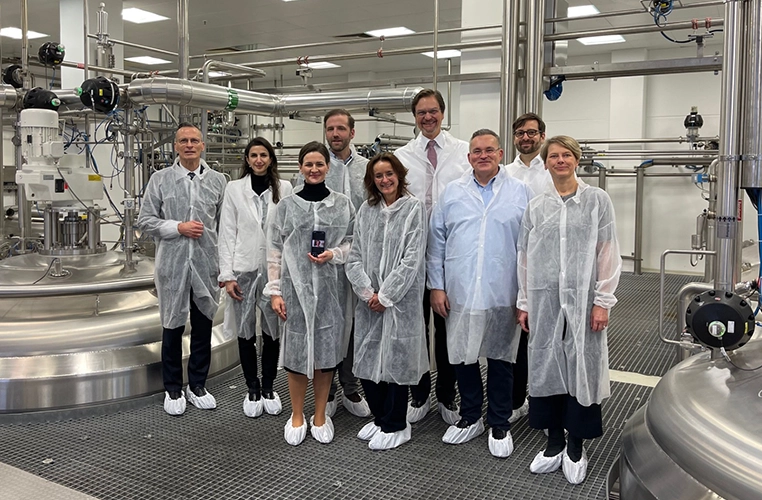
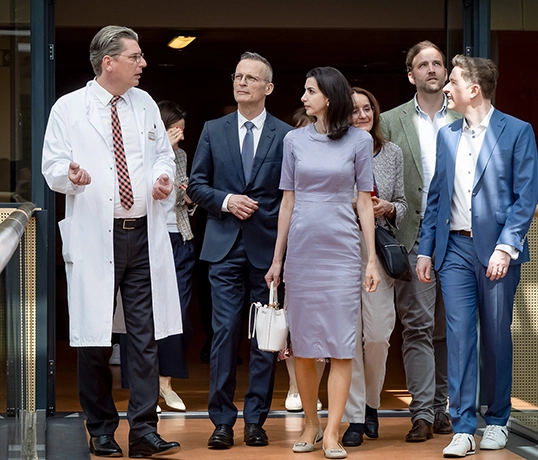
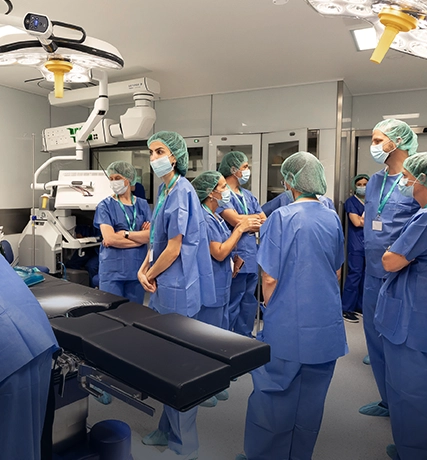
During visits to Friedberg, Madrid, and Berlin over the past two years, the members of the Sustainability Advisory Board were able to gain insights into sustainability activities at Fresenius.
Looking back on 2025
In 2025, the Advisory Board observed a clear shift from policy commitments to action priorities. A central milestone was the completion of a structured, Group-wide human rights risk assessment, providing a clearer understanding of the most significant risks across operations and the supply chain. This is reflected in more granular risk assessments, clearer prioritization of salient risks, and further developed grievance and remediation mechanisms.
Site visits to a production facility in Friedberg, Germany, and a clinic in Madrid, Spain demonstrated how sustainability is embedded in day-to-day operations and how closely human rights, environmental performance and quality of care are linked at Fresenius. Two environmental priorities stood out: reducing greenhouse gas emissions, particularly in Scope 1 and 2 and increasingly also in Scope 3; and lowering water withdrawal at production sites.
What’s next
Looking ahead, the Board expects human rights and environmental due diligence to remain central. Success will depend on embedding due diligence processes into procurement, supplier management and operational decision making, rather than treating them as standalone compliance exercises. The Board will continue to provide external perspectives and constructive challenge, supporting Fresenius in translating regulatory and societal expectations into feasible, scalable action – acting together.
Perspectives from the Advisory Board
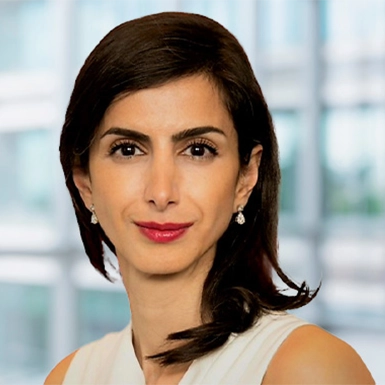
Anahita Thoms
“‘Acting together’ means shared responsibility across functions and along the entire value chain. Sustainability becomes effective when legal, procurement, operations, and healthcare professionals work together – and when expectations toward suppliers are combined with dialogue, partnership, and capability building.”
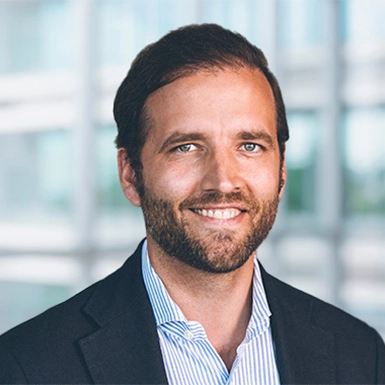
Fabian Kienbaum
“Looking back, 2025 marks an important step forward in Fresenius’ sustainability journey. Key priorities were clarified, responsibilities sharpened, and several sustainability topics moved from analysis into practical execution. In this context, I would like to highlight the work accomplished by the HR leadership team who have not only increased operational efficiency significantly, but are also clearly on the right path to elevate HR as a trusted business advisor.”
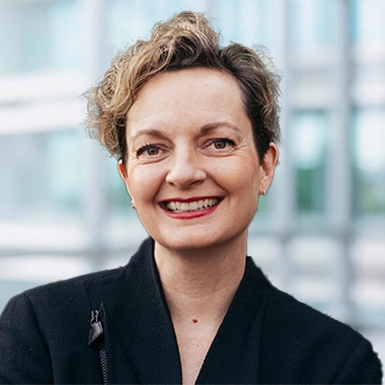
Prof. Dr. Judith Walls
“Some of the important steps that Fresenius has taken in the last few years include looking more closely at the environmental footprint in its own activities and along the supply chain. Of particular note is the increased focus on reducing Scope 3 emissions, which occur in the areas that make up the largest share of the Group’s GHG emissions.”
Dr. Fiona Adshead
“It has been so inspiring to see the progress made on the key focus areas and with building the Sustainability Framework to resonate and advance Fresenius’s purpose. Underpinned by a real commitment to meaningful and pragmatic performance measures, the approach gives confidence in the organization’s ability to undertake and learn from continual and sustained action.”
Find out more about the sustainability activities at Fresenius: