


Our commitment to water
We place particular emphasis on preserving water quality. In water-stressed areas, we are especially committed to reducing our water withdrawal.1
Water requirements in hospitals and in the production of pharmaceutical products
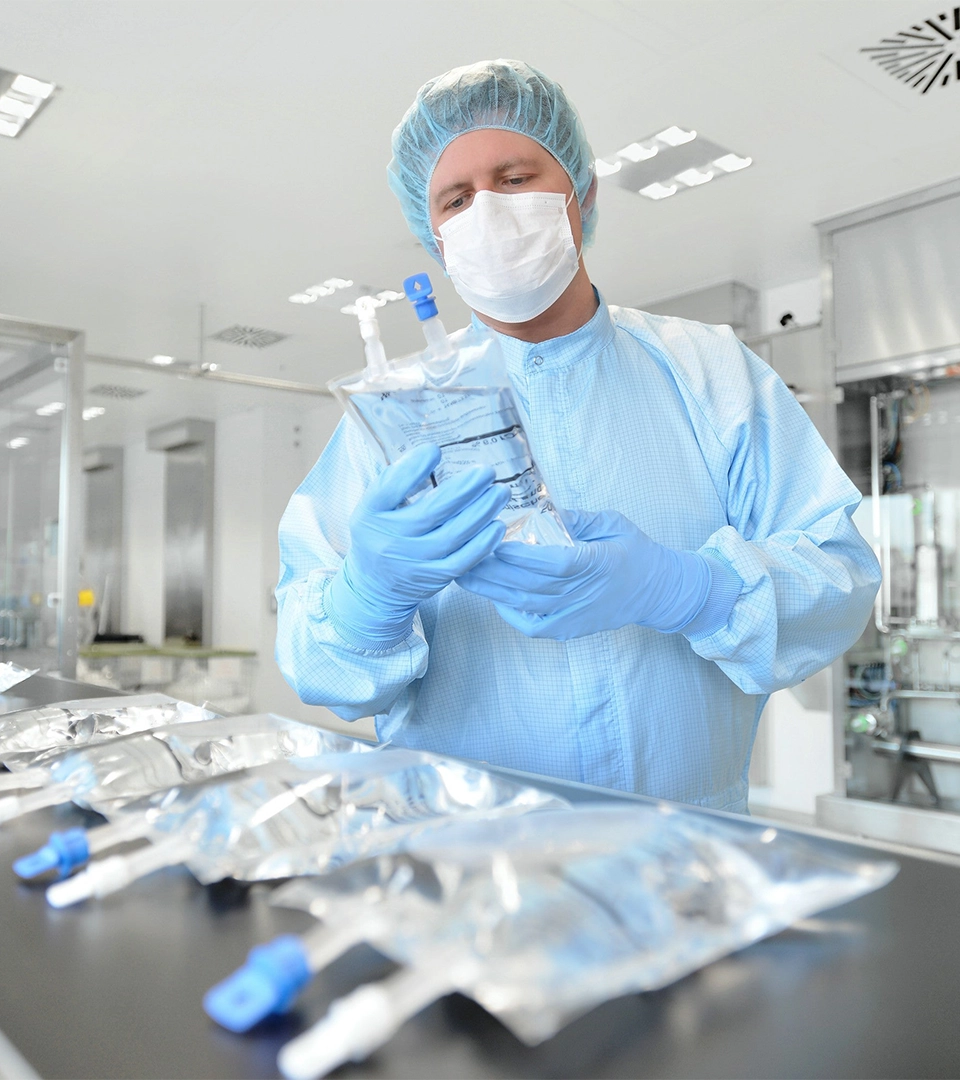
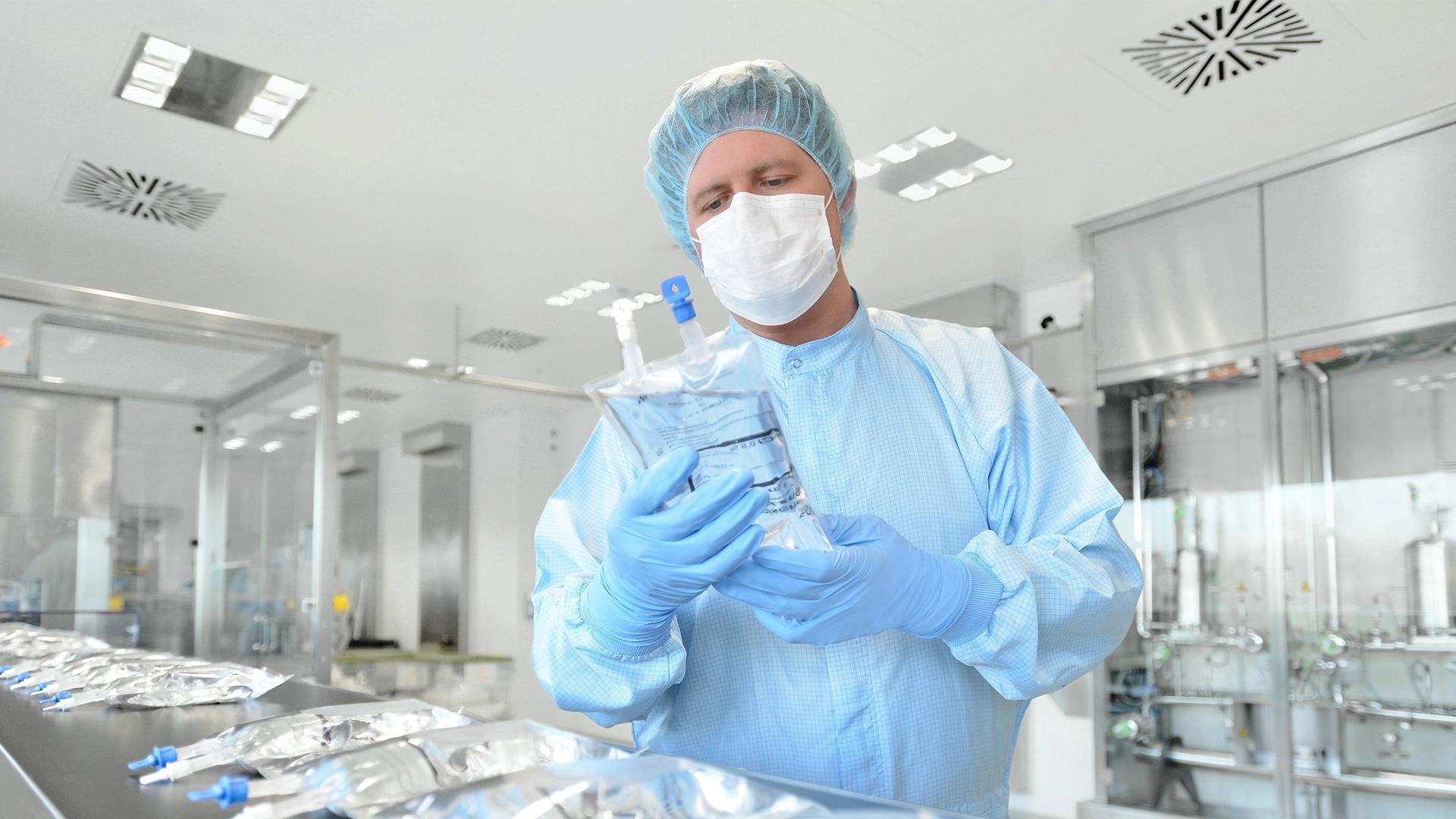
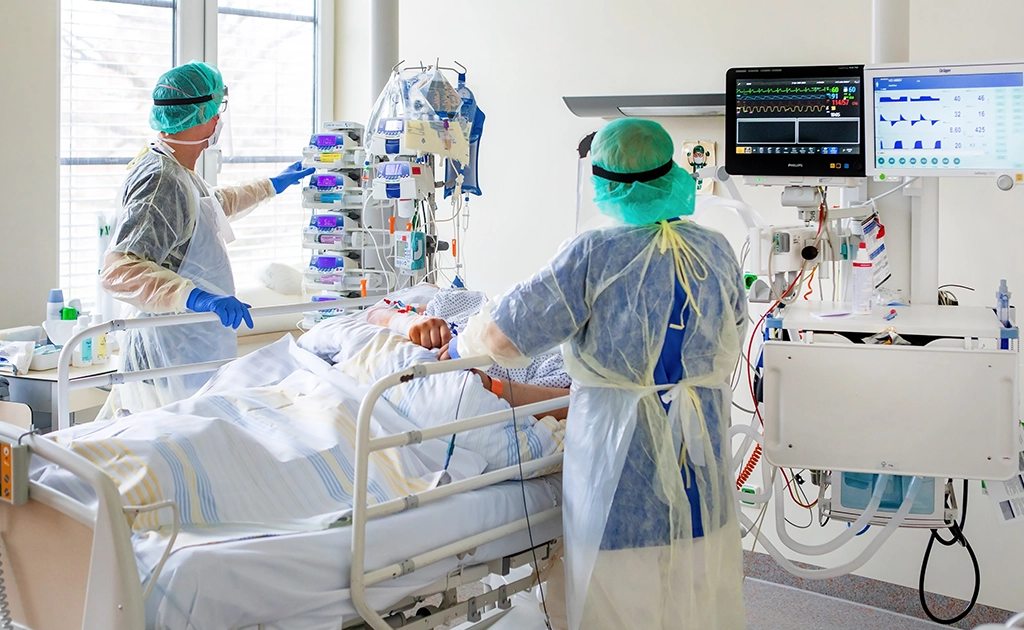
An adequate supply of fresh water is important in hospital operations for meeting high hygiene standards and thus ensuring patient safety. For this reason, the opportunities to reduce consumption here are limited. Water is also an important component of some pharmaceutical products, such as infusion solutions. The water used for these products must meet even higher quality standards than those governing drinking water. We are unable to reduce the amount we use for this purpose. One of the main ways in which Fresenius can save water therefore lies in the processes used to manufacture its products, such as cooling or sterilization.
Our aim of reducing water consumption in production processes
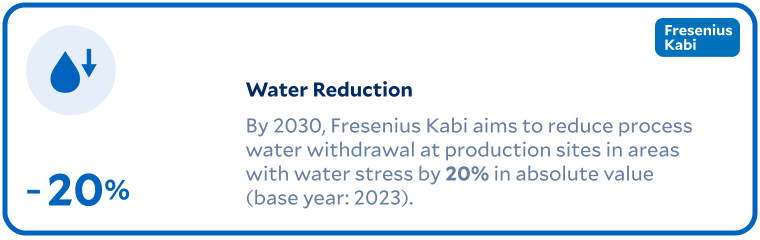
In 2025, Fresenius Kabi reduced water withdrawal in water-stressed areas by around 2.6% compared to the base year, which means that we are well on course to achieve our target by 2030.

Tobias Listmann
Director of Global Water & Project Management at Fresenius Kabi
“Fresenius Kabi is in the process of trying to meet its reduction target. In 2025, for example, conventional vacuum pumps were replaced by models that either do not require water at all or recirculate the water used. In addition, by the end of 2026, we want to precisely record relevant water flow at selected production sites with the aid of so-called water maps. This will enable us to identify areas where water can be saved or reused.”
Site in France – heat pumps instead of water
Until now, the production site in Louviers, France, has used river water, among other things, to cool its plants. From 2026, Fresenius Kabi will be fundamentally changing the system here. The use of heat pumps should reduce the amount of river and groundwater needed for cooling. The heat pumps absorb the waste heat from the production processes and feed it into the municipal heat grid. This waste heat can then be put to good use. At the same time, the plant needs less water for cooling. According to the site’s own calculations, it will be able to save around 160,000 m3 of water per year in the future.
Highlight Story
Resistant pathogens: Prevention in hospitals and when manufacturing antibiotics
Read Highlight Story
Manufacturing medicine – controlling antibiotics in wastewater
Antibiotics can enter natural ecosystems via wastewater, where they promote the development of antibiotic-resistant bacteria. Find out about the measures we are taking in production plants and hospitals to reduce the risk of antimicrobial resistance in the Highlight Story: Resistant pathogens: Prevention in hospitals and when manufacturing antibiotics.
Water in everyday hospital operations – between hygiene and security of supply

Leticia Moral
Infrastructure, High Technology Equipment, Maintenance, Electromedicine & Sustainability Director at Quirónsalud
“Even if the savings potential in hospitals is limited, we at Quirónsalud are looking at various ways to use water more efficiently. We have for instance set up a Water Optimization Working Group. The first step is to understand how we use water. That is why we are strengthening our monitoring systems and installing sub-metering to record detailed consumption patterns. We are also exploring solutions to reduce water consumption in sterilization processes and public toilets.”
Hospitals as guardians of water quality
Fresenius continuously monitors water quality in its healthcare facilities, making it possible to detect any contaminants and anomalies in drinking water quality. In some German municipalities, Helios hospitals serve as local testing centers for drinking water quality. The hospitals communicate with the authorities and inform them if any critical deviations from the drinking water standard are identified, enabling Fresenius Helios to help protect patients as well as the surrounding population.
Water reserves in case of emergency
All hospitals have emergency plans in place to maintain patient healthcare even in the event of water shortages. In Germany, solutions such as additional modules to treat the water are used in instances of contamination. In most Spanish hospitals, special pipe systems linked to water reserves are designed to bridge the supply gap for a short period of time in the event of loss of drinking water.
1 According to the World Resources Institute, baseline water stress measures the ratio of total water demand to available renewable surface and groundwater supplies. Water demand includes domestic, industrial, irrigation, and livestock uses. Available renewable water supplies include the impact of upstream consumptive water users and large dams on downstream water availability. Higher values indicate more competition among users. We report in detail on our reduction target, the measures planned to achieve it, and the level of progress in the audited Sustainability Statement 2025.