

Sustainability aspects are relevant at many points in the daily operations of our Helios and Quirónsalud hospitals. Click through the graphic to find out more.
Digital transformation
Digital transformation
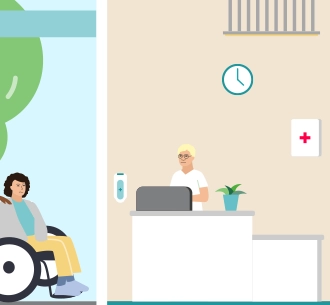
To ensure the best possible preparation for reception and treatment of patients in our hospitals, we are pursuing many digitalization initiatives and focusing on expanding our IT infrastructure and digital services. These include our patient portal for booking appointments and the electronic patient file. The use of AI-supported technologies is also part of the digitalization of our hospitals. At Quirónsalud, for example, we are deploying Scribe, an AI program that transcribes treatment conversations, creates medical reports, and suggests the prescription of medication and tests to be performed.
Further information Highlight Story: Enhancing patient experience: Bridging digital care and energy consumption Highlight Story: HeSaMeDa: Using data securely for better careFood supply

Food supply
At Helios Germany, we charge an environmental fee for disposable tableware in order to reduce the amount of waste we produce. At our Spanish hospitals, surplus food can be purchased at a reduced price.
Emergency department
Emergency department
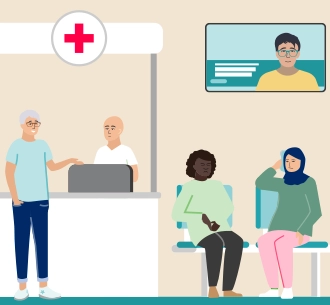
Like almost every hospital, we use a triage system in the emergency department: all patients are classified at the entrance according to an established procedure depending on their symptoms and the severity of their illness. This is carried out by a nurse trained in triage, supported by medical staff. In our Spanish hospitals, the emergency departments also offer digital appointments. This makes the process more efficient and helps reduce waiting times.
Further informationHygiene
Hygiene
In order to avoid infections within our clinics, it is essential to strictly adhere to hygiene standards. To this end, we have specific instructions for numerous diagnostic, nursing and therapeutic processes in our hospitals and health centers. Our employees receive regular training on hygiene standards from local hospital hygienists and hygiene specialists.
Highlight Story: Resistant pathogens: Prevention in hospitals when manufacturing antibioticsGreenhouse gases in hospitals
Greenhouse gases in hospitals
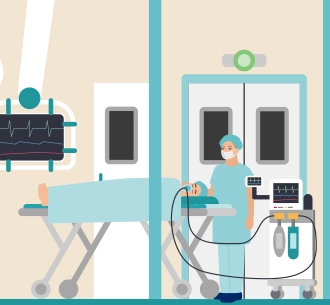
Anaesthetic gases used in operating rooms and intensive care units are usually released into the outside air via the exhaust air system – where they have a more harmful effect on the climate than CO2. Anesthetic gases cause a relevant part of the greenhouse gas emissions in a hospital. To reduce anesthesia-related emissions, we are equipping intensive care units and operating rooms at our German hospitals with systems that capture exhaled anesthetic gases. In addition, we are replacing certain anesthetic gases with less climate-damaging alternatives at our hospitals in Germany and Spain.
Further information Highlight Story: What do anesthetic gases have to do with the climate?Robots in the operating room
Robots in the operating room
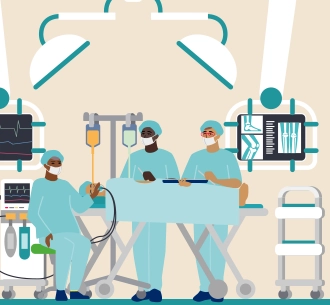
The use of robots enables us to perform computer-assisted, gentle surgery on areas that require an extremely precise procedure. During a minimally invasive procedure with the robot, the doctors sit in front of a console and see instruments and the surgical field enlarged in three dimensions on the screen directly in front of them. They control the robot’s arms, which are much more flexible than human hands. All movements are transferred to the instrument arms with millimeter precision in real time.
Further informationResource management
Resource management
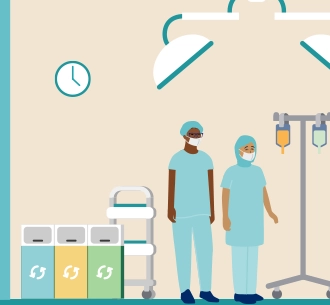
We need a lot of different products and materials in our hospitals – as consumables for nursing care and for medical treatment, pharmaceuticals, and medical devices. In the area of hospital administration, for example, we reduce our resource consumption by using duplex printing, i.e. double-sided printing, on all multifunctional devices, by automatically switching off PCs and monitors that are not in use and by introducing recycled paper – in the printer or in bathroom areas. In Spain, we have phased out all printers for outpatient consultations and now only print when patients request a physical copy.
Hospitals produce large quantities of waste every day. This volume of waste poses a challenge for waste management because the variety of waste types requires different disposal methods, especially hazardous waste. An effective waste management strategy is crucial to ensure that waste is disposed of in a safe and environmentally sound manner.
Medical quality
Medical quality
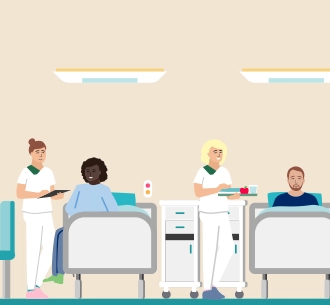
We want to offer our patients excellent quality care at all times. To this end, we have established effective management systems for medical quality and patient safety at Helios and Quirónsalud, which help us to continuously improve our services.
Further information Highlight Story: What exactly is … a hospital cluster? Highlight Story: Moments that create impact: How patient experience takes shape at QuirónsaludEqual treatment and opportunities for all

Equal treatment and opportunities for all
We are committed to an appreciative working environment for all employees. We are committed to a climate of mutual respect and trust. It is our ambition to continuously develop our corporate culture and attract, promote, and retain talent.
Further informationClimate target

Climate target
We want to become greenhouse gas neutral in our own operations by 2040. This applies to direct and indirect GHG emissions (Scope 1 and 2). We want to achieve this through comprehensive energy efficiency measures, the purchase of green electricity and increasing the proportion of self-supply, for example through photovoltaics. To achieve this target, we plan to eliminate all avoidable greenhouse gas emissions (at least a 90% gross reduction). Unavoidable emissions (no more than 10%) are to be offset in the future through measures that permanently remove CO2 from the atmosphere.1
Further information1Detailed information on our climate targets and our climate transition plan can be found in our audited Sustainability Statement 2025.
Energy management
Energy management
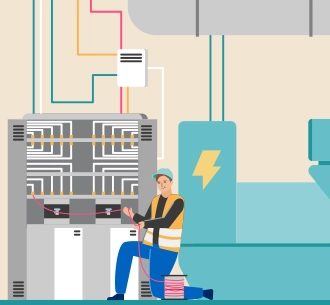
The international standard ISO 50001 sets out requirements for introducing, implementing and continuously developing energy management within a company. All clinics in Germany and 17 clinics in Spain have already been successfully certified in accordance with ISO 50001. The clinics’ own energy teams support the implementation.
Nutrition & health
Nutrition & health
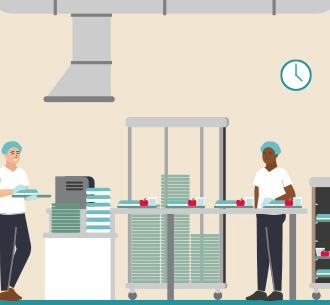
A healthy diet plays an important role in the care and recovery of our patients. At our clinics in Germany, we focus on a balanced, low-meat, increasingly plant-based diet. In Spain, the project “Programa de Alimentación Saludable” has been rolled out to foster a healthy nutrition of the patients.
Our employees
Our employees
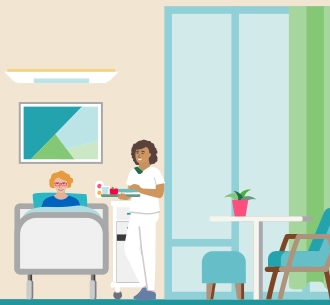
356 days a year, our employees ensure that our patients receive competent and attentive care. That is why we do everything we can to offer our employees a workplace that they can identify with and that motivates them to develop both individually and as part of a team. We focus on respectful cooperation on an equal footing, attractive working conditions, and comprehensive further training opportunities at all career levels.
Further informationDoing the right thing
Doing the right thing
As an operator of hospitals and medical centers, we want to live up to our social responsibility. That is why we promote a strong compliance culture that enables employees, partners, and suppliers to act ethically and legally at all times: From compliance with legal requirements and transparent cooperation as a business partner to the protection of human rights along our supply chain.
Further information