



Our commitment to decarbonization
We have a clear target: net zero emissions from our own operations and along our value chain by 2050.1
Reconciling energy demand with climate action ambitions
Fresenius manufactures medical devices and operates healthcare facilities, activities that use energy and generate greenhouse gas emissions. In production areas, for example, the necessary machines and containers need to be constantly sterilized, while in our hospitals, a wide range of technical systems are in continuous operation. This presents us with particular challenges: On the one hand, we want to reduce our energy consumption. On the other hand, we must guarantee the safety of the patients in our facilities at all times while also making sure that we have a secure energy supply at our production sites.
At the same time, we are already noticing that the consequences of climate change, such as extreme weather events, are having an impact on the working and living conditions of our employees and patients. Climate change is also a health matter. That’s because heat stress and changing climatic conditions affect particularly vulnerable groups such as the elderly, the chronically ill, and children.
Our climate targets2
Target by 2030: to cut our entire Scope 1 and Scope 2 emissions by 50% in absolute terms (base year: 2020)
Target by 2040: greenhouse gas neutrality for Scopes 1 and 2 (base year: 2020)
Target by 2050: net zero emissions across Scopes 1, 2, and 3
Scope 1 comprises direct emissions that we cause through our own business activities. Scope 2 relates to indirect, energy-related emissions that are caused by the consumption of purchased energy. Scope 3 covers other indirect emissions from our value chain.
Scope 1 and Scope 2 target pathway to 2030
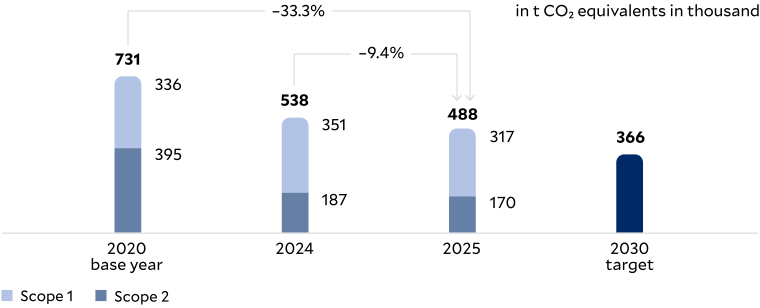
Since 2020, we have been able to cut our absolute Scope 1 and Scope 2 emissions by a total of 33.3%. Detailed information on our carbon footprint can be found in our audited Sustainability Statement 2025.
Marc-Alexander Mahl
President of Pharma, Nutrition & Sustainability at Fresenius Kabi
“We are making good progress towards achieving our target by 2030. We follow an action plan that includes short‑ and long‑term measures. They include continuously improving our energy efficiency in buildings and in processes, and expanding the use of renewable energy. This enables us to track our progress transparently and further develop our efforts each year.”
Pulling the right levers – decarbonization at Fresenius
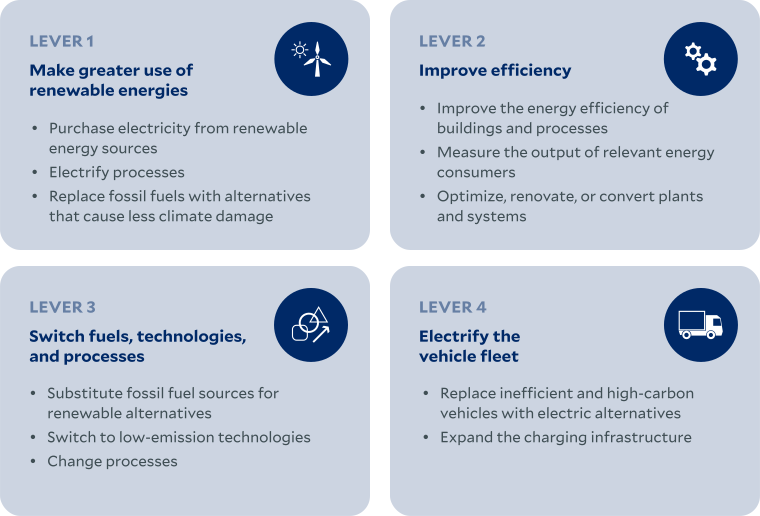
There are various levers that can help us to achieve our climate targets. The focus here is on making greater use of renewable energies, improving energy efficiency, and optimizing production technologies.3
Decarbonization levers
Only cooling or heating a room in the hospital when it is actually occupied? A connection between the building management system and Quirónsalud’s Casiopea app can make this possible. Find out how the app also simplifies processes for patients and hospital staff in our Highlight Story: Enhancing patient experience: Bridging digital care and energy consumption.
Highlight Story
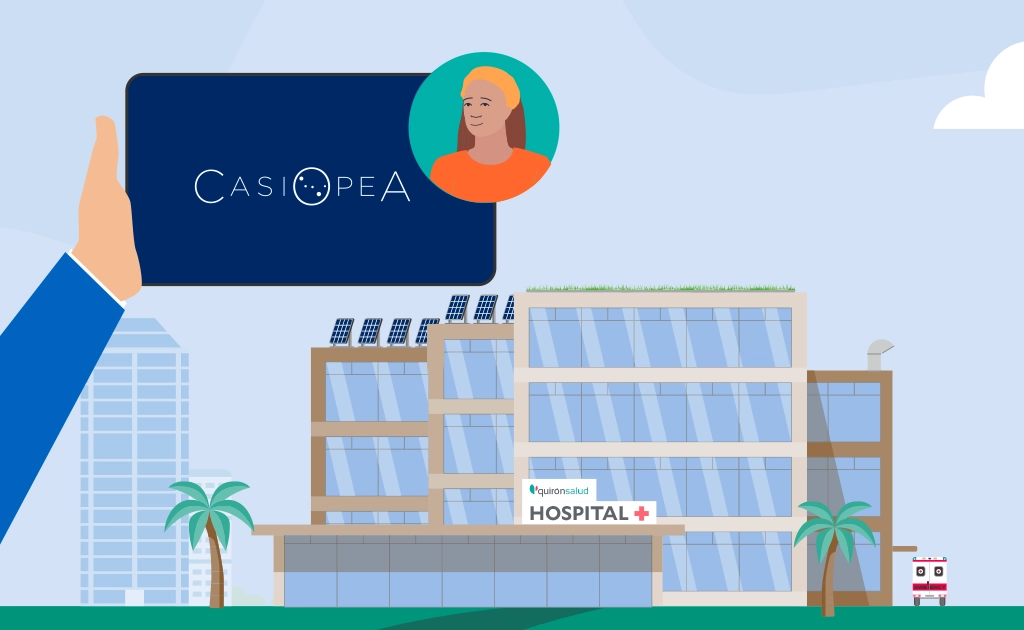
Enhancing patient experience: Bridging digital care and energy consumption
Read Highlight Story
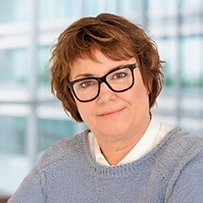
Kirsten Nyland
Senior Vice President, Environmental and Occupational Management at Fresenius Kabi
“At Fresenius Kabi, we are working to continuously reduce the environmental footprint of our manufacturing processes. This includes efficiency efforts at our sites as well as rethinking the way we produce key components of our pharmaceutical portfolio. One example is the production of Water for Injection (WFI): It is indispensable, but requires a high amount of energy. In 2025, we therefore launched pilot projects at two sites to test technologies that have the potential to significantly lower both energy and water consumption in the future.”
Anesthetic gases are one of the largest direct sources of emissions in hospital operations. Helios has introduced a system for capturing the gases so that they no longer reach the outside air in an unfiltered state in the future. Read all about it in our Highlight Story: What do anesthetic gases have to do with the climate?

Every step counts
Cada Paso Cuenta (“Every Step Counts”) is an initiative of the Quirónsalud Foundation that brings together various cooperation projects. In spring 2025, “Cada Paso Cuenta: Muévete por el Mediterráneo” (“Every Step Counts: Move for the Mediterranean”) was launched to raise awareness for environmental responsibility.
1,243
participantslogging their steps; 80 volunteers participating in the beach clean-up
121,673
km total distancelogged in the two-week walking challenge (≈ 2,5 laps around the Mediterranean); 160,095,693 steps
Employees across Spain joined the walking challenge and tracked their steps to support the restoration of Mediterranean ecosystems: Based on the total distance logged, the Quirónsalud Foundation committed funds to local projects.
This support enabled the restoration of 450 m2 underwater meadows and the planting of 500 native trees in the Valencia region. As an additional measure, volunteers from Quirónsalud as well as local residents took part in a beach clean-up in June, helping an area still affected by severe flooding in 2024.
183.3
kg of wastecollected during the June 2025 beach clean-up
450
m2of underwater Posidonia meadows in the Mediterranean restored
500
native trees planted1 Net zero emissions means that Fresenius will reduce its greenhouse gas (GHG) emissions across Scopes 1 to 3 as much as possible by 2050 and offset the remaining unavoidable GHG emissions (no more than 10%). Fresenius has defined interim targets for the path to net zero and produced a climate transition action plan. Detailed information on our climate targets and our transition action plan can be found in our audited Sustainability Statement 2025.
2 Fresenius plans to eliminate all avoidable GHG emissions (at least a 90% gross reduction) to meet the 2040 target and the net zero target by 2050. Unavoidable emissions (a maximum of 10%) are to be offset in the future by measures aimed at the permanent removal of CO2. Detailed information on our climate targets and our climate transition action plan can be found in our audited Sustainability Statement 2025.
3 Detailed information on our climate transition action plan can be found in our audited Sustainability Statement 2025.