

How Fresenius Kabi supports access to essential therapies in everyday care
Healthcare progress is not only driven by major medical innovations. In everyday practice, reliable access to essential medicines, medical devices, and nutrition therapies is equally critical. These therapies form the basis for safe and effective care and enable clinicians to deliver treatment consistently day by day. Fresenius Kabi contributes to the stable availability of affordable, high‑quality therapies and works closely with healthcare partners to support this effort.
Impact at a glance
Patients reached: In 2025, we reached 450 million patients by providing essential medicines, medical devices, and nutritional therapies.
Essential medicines: In the United States, 67% of Fresenius Kabi IV drug units shipped in 2025 appear on the Food and Drug Administration (FDA) Essential Medicines List. In Europe, 69% of the total units of Fresenius Kabi generics product range sold in 2025 are part of the Union list of critical medicines by the European Medicines Agency.
Affordability and system value: Access to high‑quality generics and biosimilars can support cost‑conscious care and help healthcare systems manage treatment needs (source: Medicines for Europe1).
Impact stories from selected countries
Examples from everyday care demonstrate how reliable supply structures, collaboration, and professional expertise enable patient-focused care across different settings. The following case studies outline the practical impact of Fresenius Kabi’s approach to healthcare delivery and illustrate how access to essential therapies makes a meaningful difference for patients and their families, while also supporting the healthcare system.
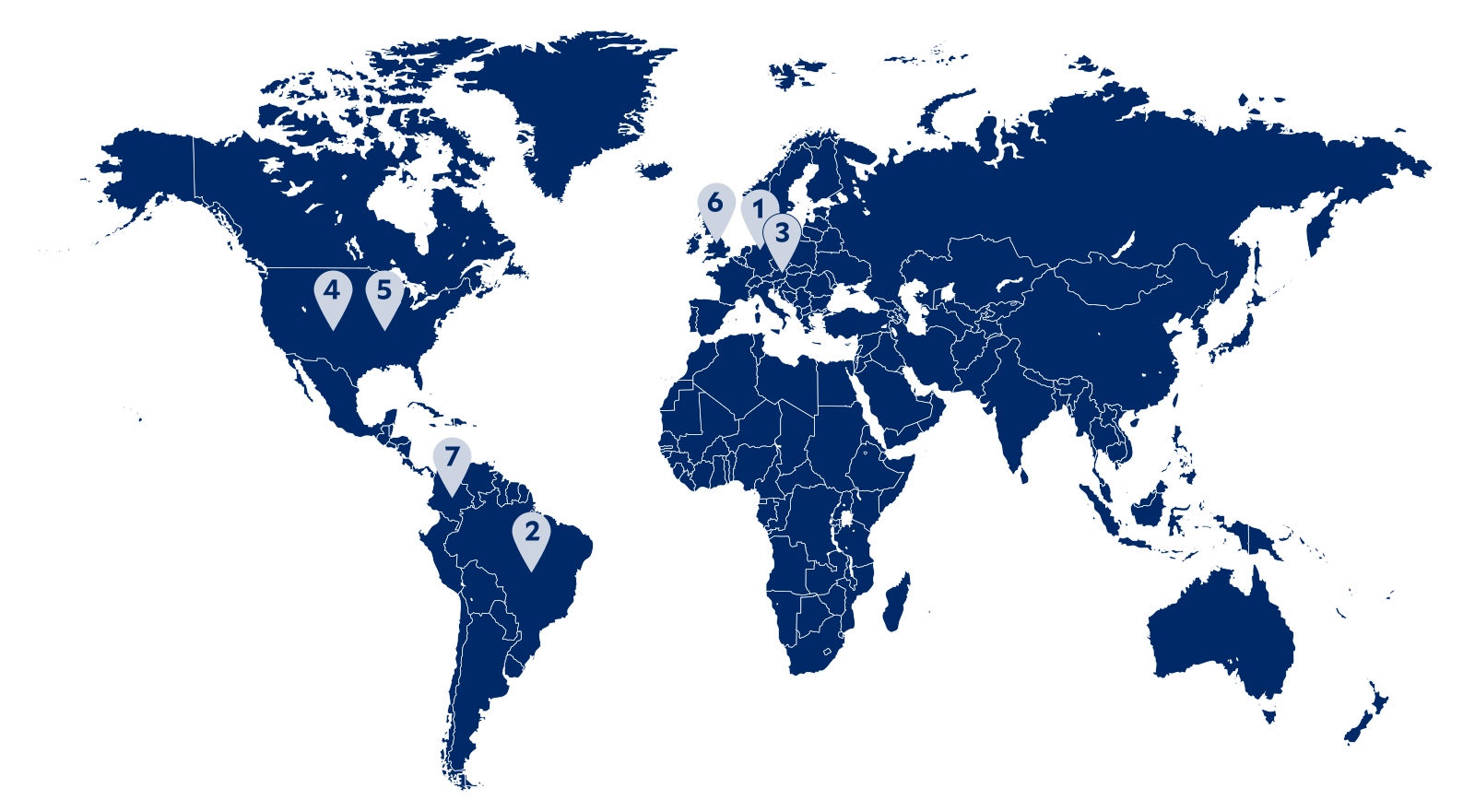
1 – Germany: Individualized home nutrition supporting continuity of care
When conventional care pathways reach their limits, access to specialized nutrition therapies can offer additional options for patients with complex needs like Sonja. After a long and medically challenging course of treatment, Sonja’s health deteriorated to the point that she was placed on an end‑of‑life care pathway. At that stage, no further nutritional options were available within the existing care framework.
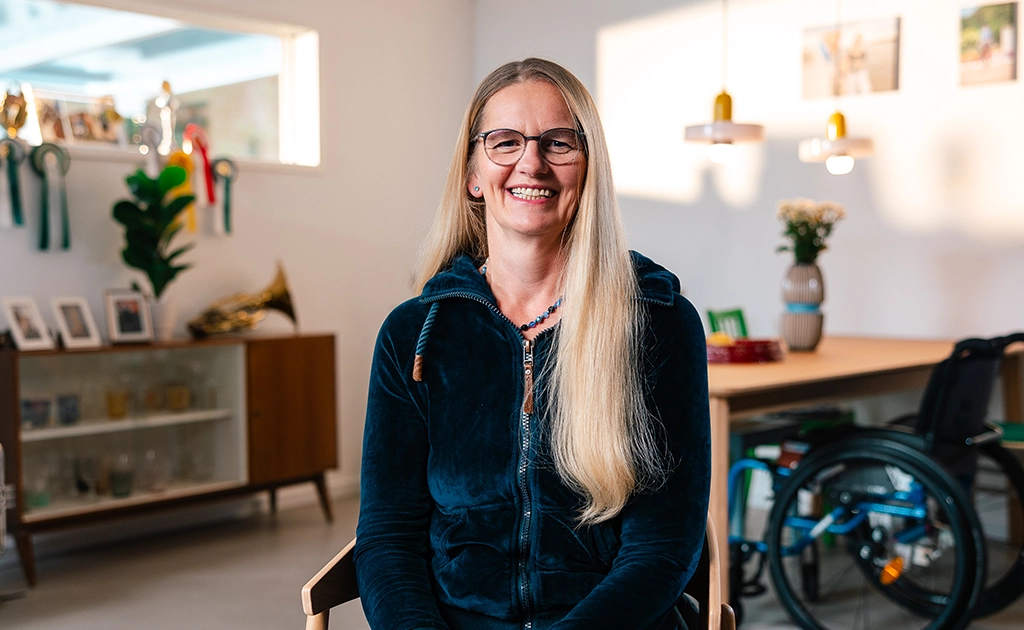
A specialized Fresenius Kabi homecare nursing team reassessed her situation and initiated individualized home parenteral nutrition. The therapy was accompanied by close monitoring, regular dose adjustments, and practical education. Over time, Sonja regained strength, independence, and quality of life. Her example demonstrates how access to specialized nutrition therapies can enable continuity of care and help patients maintain autonomy and dignity during vulnerable phases.
2 – Brazil: Strengthening health literacy in cancer care
For patients with leukemia or lymphoma and their families, navigating treatment pathways can be complex. Unequal access to reliable information, fragmented care structures, and logistical barriers can further complicate an already demanding situation.
Patient support partnerships can help address these challenges. Through corporate sponsorship of ABRALE, Brazil’s leading patient association for blood cancers, patients and caregivers gain access to structured information, guidance, and support throughout the disease journey. This contributes to improved health literacy, reduced information gaps, and greater confidence for families managing complex cancer care, showing how partnerships can promote more equitable access to information within healthcare systems.
By the end of 2024, ABRALE has already served approximately 57,000 patients.
3 – Austria: Adapting immune therapy to pediatric needs
Children with severe immune-mediated conditions need therapies adapted to their size and clinical realities – yet many technologies were not originally designed with pediatric needs in mind. For children with severe immune‑mediated conditions, extracorporeal photopheresis (ECP) is an essential treatment option, but earlier systems were often associated with long procedures and limited suitability for pediatric use.
With the introduction of Amicus Blue, treatment teams were able to better adapt ECP procedures to a child’s size and condition. Hospitals have gained an option that aligns more closely with the realities of treating children, helping to reduce treatment burden and support more appropriate care for highly vulnerable young patients. This example underscores how refining established technologies can make complex therapies more feasible in pediatric settings.
4 – United States: Strengthening resilience in oncology supply
Oncology clinics in the United States continue to face intermittent shortages of generic cancer medicines, creating a persistent public health challenge. These disruptions can affect treatment planning, creating uncertainty for both healthcare professionals and patients, and in some cases compromise outcomes.
To help address this risk, Project GOLD (Generic Oncology Lifesaving Drugs) – a multi‑stakeholder pilot launched by Angels for Change, with Fresenius Kabi as a founding member and two additional industry partners – aims to protect patient access to life‑saving oncology medicines. The initiative aims to prevent shortages by maintaining a strategic buffer supply of essential oncology injectables in the U.S. Integrated with the Angels for Change Drug Crisis Hotline and Global Supply Sharing Network, it enables real‑time visibility into urgent needs and rapid deployment during supply constraints.
By reinforcing resilience across the generic oncology supply chain, Project GOLD helps safeguard continuity of care and informs a scalable, long‑term model for reducing shortage‑related risk nationwide.
5 – United States: Continuity of care in rare immune disorders
For patients with rare immune disorders such as Common Variable Immunodeficiency (CVID), uninterrupted access to intravenous immunoglobulin therapy is essential. Disruptions in plasma supply can quickly create serious health risks.

Cannan lives with CVID. Reliable access to plasma-derived immunoglobulin therapies allows patients like him to continue treatment consistently and maintain a more predictable daily routine. Fresenius Kabi supports this continuity of care by providing medical technologies that enable safe, efficient plasma collection – an essential first step in producing reliable plasma-derived therapies. Strong, dependable plasma collection is a critical foundation for consistent treatment and long-term disease management. Cannan’s story underscores the human impact behind plasma-supply reliability: Consistent treatment access keeps patients on therapy, reduces stress for families, and ensures continuous care for people with rare immune disorders.
6 – United Kingdom: Delivering complex nutrition care at home
For people who rely on Home Parenteral Nutrition (HPN), daily life can be closely tied to hospital routines, limiting independence and affecting family life.
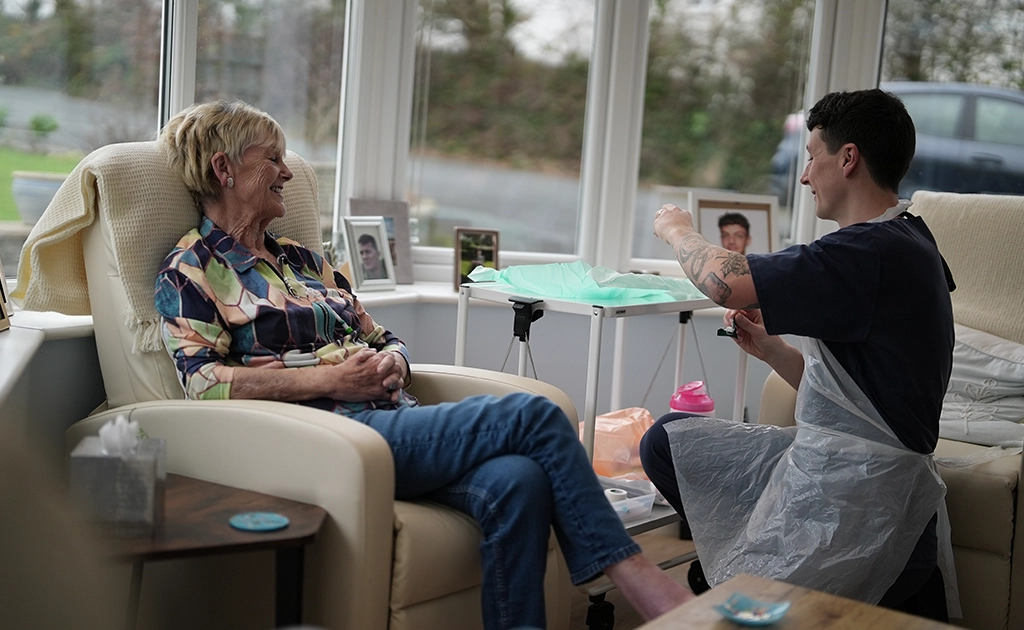
In the United Kingdom, specialized Fresenius Kabi homecare nurses enable patients to continue HPN safely at home. Through regular visits, monitoring, and hands‑on training, patients are supported in managing their therapy outside the hospital setting. For individuals living with conditions such as Crohn’s disease or recovering from bowel cancer, this approach can help restore routine and autonomy. The example demonstrates how homecare models extend healthcare capacity beyond hospital walls, enabling more accessible and patient‑centered care.
7 – Colombia: Supporting access to treatment through biosimilars
Living with a chronic condition can involve ongoing physical strain and uncertainty about access to effective treatment. For patients like Gloria, concerns about long‑term affordability and continuity of care affected both her health and sense of security and independence.

With the introduction of a Fresenius Kabi biosimilar, Gloria gained access to a more affordable treatment option that meets the same standards of safety and effectiveness as the reference biologic. The reliable availability of this therapy supported ongoing disease management and reduced concerns about treatment interruptions. Her experience reflects the broader role of biosimilars in improving access to essential therapies, especially for patients with chronic conditions. By improving affordability and continuity of care, biosimilars can generate social value that extends beyond individual patients.
1 Source: Medicines for Europe; IQVIA, “Beneath the Surface: Unravelling the True Value of Generic Medicines”, 2024