


Moments that create impact: How patient experience takes shape at Quirónsalud
A hospital stay is shaped not only by medical outcomes, but by everyday moments: a nurse who takes time to listen, a doctor who explains the next step clearly, or a team that works well together. These interactions strongly influence how patients and their relatives experience care.
At Quirónsalud, patient experience is understood as the sum of these moments. That is why they introduced several initiatives that focus on human behavior, empathy, and teamwork in daily practice: Beyond Empathy, the Emergency Care Treatment Manual, and the Quirónsalud Olympics.
Recognize: Beyond Empathy
Patients often remember how they are treated just as much as what is done medically. Beyond Empathy was created to make day-to-day moments visible. The initiative invites patients and colleagues to highlight concrete, positive behaviors that make a difference in their experience.

Patients can share messages of gratitude, and staff members can recognize one another for actions that made a difference via a corporate recognition form or a Recognition Dashboard. These examples are collected and shared, helping teams see what patient‑centered care looks like in practice – and learn from them.
More than 4,800 professionals took part in the initiative.
Over 18,000 recognitions of positive behavior were submitted by staff members.
More than 270,000 patient recognition messages were shared via the Recognition Dashboard.
Humanize: Emergency Care Treatment Manual
Emergency departments are fast‑paced, complex environments where patients often feel stressed or uncertain. Clear communication and empathetic behavior can make an important difference to the patient’s perceived quality of care. The Emergency Care Treatment Manual offers practical guidance for everyone involved in the emergency patient journey – from admissions and nursing staff to physicians, porters, security, and cleaning teams. It provides a shared understanding of how patients should be addressed and supported throughout their stay.
The manual is structured around five simple principles:
-
HEARING (OÍDO) – How we listen and explain.
-
SIGHT (VISTA) – How we look, observe, and acknowledge.
-
TOUCH (TACTO) – A professional and respectful physical approach.
-
HEART (CORAZÓN) – Empathy, emotional presence, and compassion.
-
TEAM (EQUIPO) – Coordination and shared responsibility.
In hospitals where it has been implemented, an increase in patient satisfaction of up to 15 NPS points1 was measured. In the next years, similar manuals are planned to be implemented for additional care areas such as outpatient surgery and consultations.
Gamify: Quirónsalud Olympics
The Quirónsalud Olympics use gamification to encourage teamwork and engagement around patient experience goals. In the “Summer Olympics”, multidisciplinary hospital teams work together on outpatient challenges such as reducing waiting times, optimizing scheduling, or coordinating handovers. The “Winter Olympics” focus on inpatient experience, including hospitalization NPS, clarity of information, rest, courtesy visits, and safety.
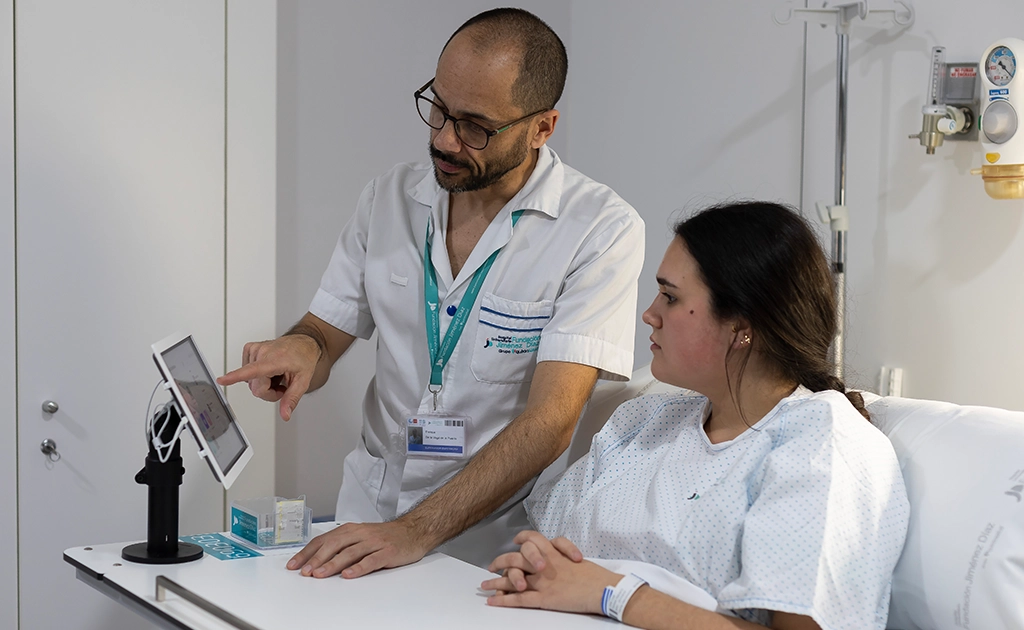
Beyond competition, the Olympics foster continuous improvement: teams review results, share success stories, and learn from one another across hospitals and disciplines.
Together, these initiatives show how patient experience can be strengthened through recognition, practical guidance, and collaboration.
1 Quirónsalud measures patient satisfaction using the Net Promoter Score (NPS). Further information on the NPS at Quirónsalud can be found in the audited Sustainability Statement 2025.