


When every day counts: EASYGEN is set to make cell therapy more accessible
In severe cancer cases, time can become a critical factor. However, CAR-T cell therapy, a highly effective form of individually engineered immunotherapy, often takes a very long time to prepare and manage. This is where the EU-funded EASYGEN (Easy workflow integration for gene therapy) project comes in: A consortium of 18 international partners is examining how the complex manufacturing and care processes for this special form of therapy can be simplified and better integrated into everyday hospital operations.
CAR-T cell therapy is a form of immunotherapy whereby T cells are removed from a patient and genetically modified in the laboratory before being returned to the body to detect and destroy certain cancer cells. The manufacturing process is always individual for each person, requiring specialized infrastructure as well as extensive quality controls. This can take up to six weeks. Then there are international transport routes and the currently limited number of centers capable of administering the therapy. These structural factors mean that only a small proportion of eligible patients have thus far been able to access treatment. To date, around 45,000 people worldwide have received such therapy (as of December 2025), while the majority of patients – around 80% in Europe (according to the IQVIA Report 2025) – still haven’t had the treatment.
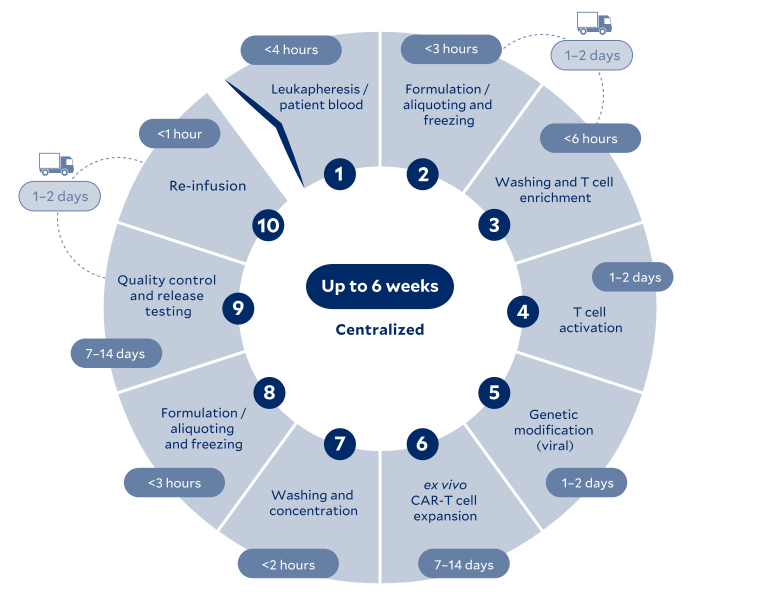
The classic manufacturing process:
The cells pass through many stages, including transport and laboratory processes, such as freezing and quality testing. It typically takes up to six weeks before the patient receives the CAR-T cells back.
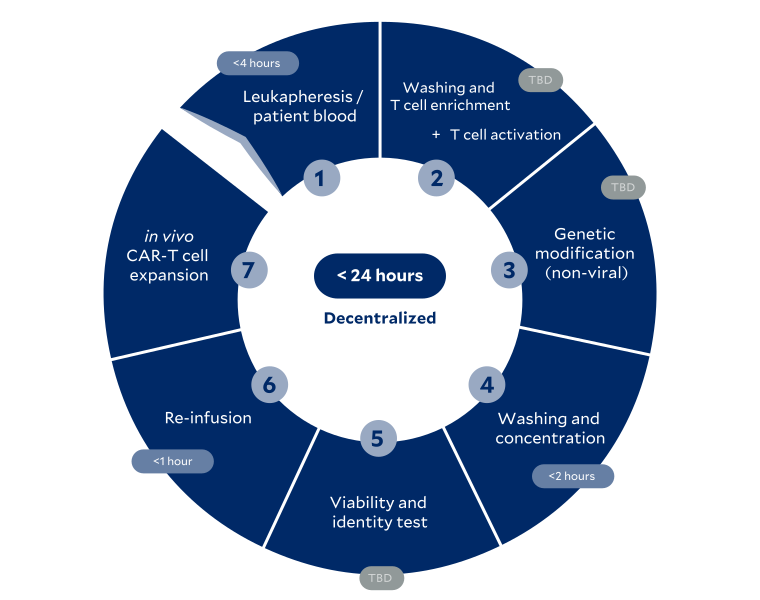
The manufacturing process with EASYGEN:
The cells are processed in the place where they are needed using an automated closed-system approach. This is designed to shorten the entire process – from the collection of the cells to their return to the patient – to less than 24 hours.
The aim of EASYGEN is to better coordinate the many individual work stages in laboratories and hospitals. Various European companies and scientific institutions are working together under the direction of Fresenius to give patients faster and easier access to the treatment. Standardized modules, digital documentation, clearly defined interfaces, and more automated processes are designed to simplify both the complex cell manufacturing process and the use of the cells to treat patients in the long term. Thanks to EASYGEN, the task of manufacturing personalized cell therapies alone could take a matter of days instead of several weeks.
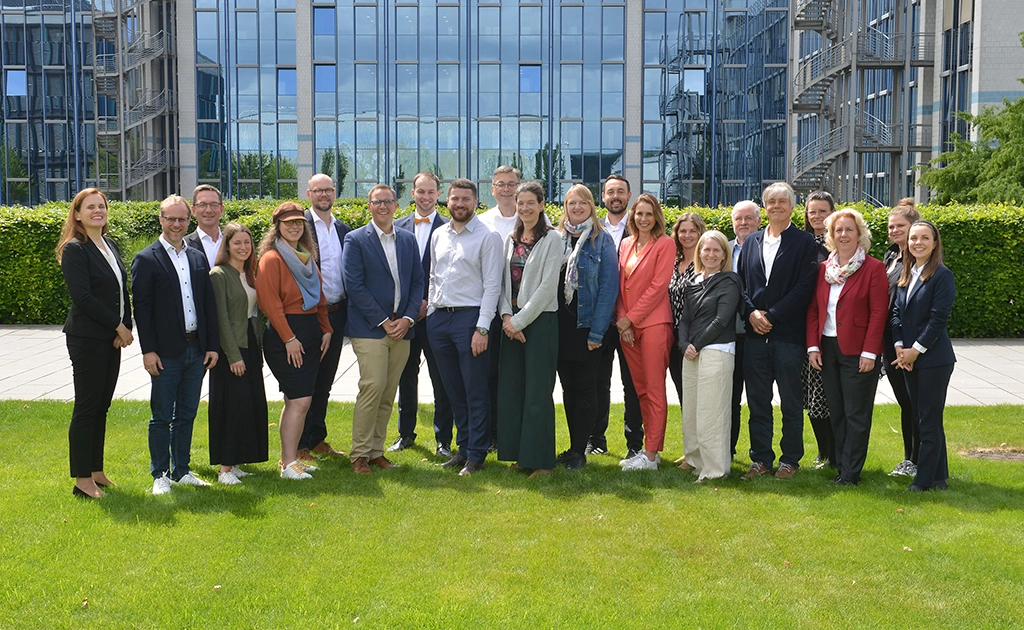
Various skills come together at Fresenius for this purpose: Fresenius Kabi is supporting the project with its expertise in the field of automated cell processing. Additional functionalities are being added to the existing Cue closed cell washing system for this purpose. Helios and Quirónsalud are helping the project with their experience gained from using CAR-T therapies in German and Spanish hospitals. Over the course of the project, both hospital groups are testing the new manufacturing process under real care conditions. As part of the Corporate Development function, the Research Office is taking the scientific and strategic lead for the European consortium. It designed and initiated the project and now acts as the Principal Investigator under EU rules while managing the overarching governance structures. With the project’s targeted approach to the networking of partners, its international positioning, and its continuous focus on scientific and technological developments, EASYGEN is likely to consolidate Fresenius’ role in the innovative field of cell and gene therapy.
The project can thus help to deliver more efficient and modern healthcare and create the conditions for innovative therapies to reach more patients in the future.