





What do anesthetic gases have to do with the climate?
Anesthetic gases are an indispensable part of modern medicine. At the same time, they represent one of the largest direct sources of emissions in hospital operations, with their global warming potential exceeding that of CO2 many times over. Most of these gases normally reach the outside air in an unfiltered state. Thanks to modern medical technology, special systems can be used to capture anesthetic gases instead of releasing them unimpeded into the atmosphere. In 2023, a system for capturing these anesthetic gases was introduced across 19 Helios hospitals. Since 2025, all ventilation spaces on intensive care units in Germany have also been equipped with the system.
But how exactly does the system work – and what does it mean for everyday life on the unit? We asked our experts.
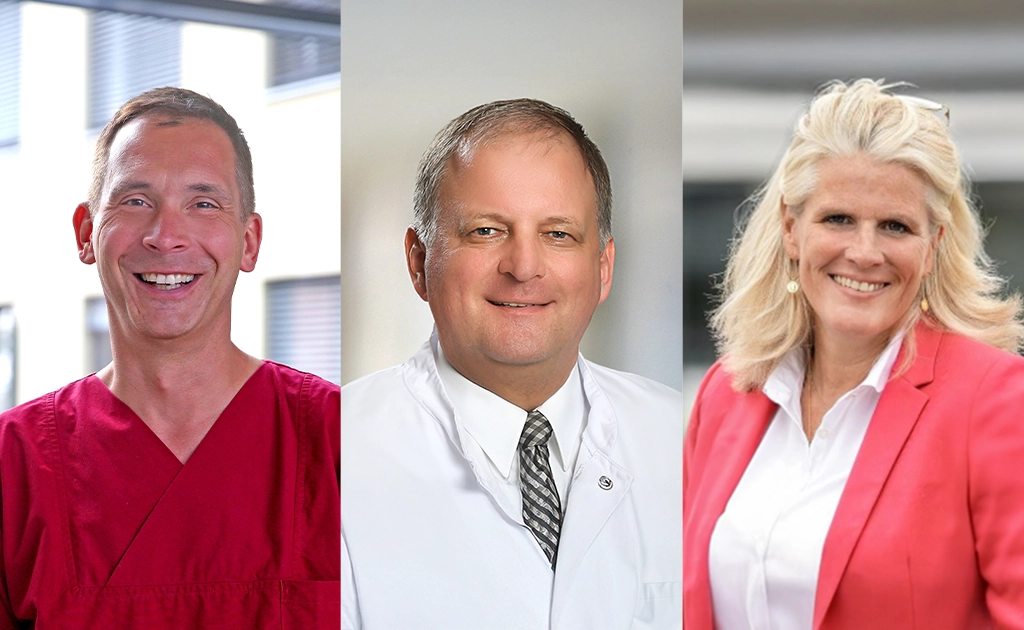
The interviewees:
Dr. Achim Labuhn, Lead Physician in Conservative Critical Care at Helios Hospital Krefeld and Head of Critical Care at Helios
Dr. Stefan Wirtz, Chief Physician in Anesthesiology, Critical Care, and Perioperative Pain Therapy at Helios Hospital Bad Saarow and Head of Anesthesiology at Helios
Constanze von der Schulenburg, Head of Sustainability Communication at Helios
How does the system for capturing gases work?
Dr. Achim Labuhn: “Since 2025, 51 of our intensive care units have been using activated carbon filters fitted to the ventilator. The anesthetic gases exhaled by the patient are captured by these filters to prevent them from being released into the outside air. Once the filters are filled to capacity, they are disconnected from the ventilator. The filter manufacturer can then extract the captured gases from the activated carbon and potentially reuse them.”
Does this change any of the processes for the nursing staff and patients?
Dr. Stefan Wirtz: “The switchover entails only minor changes for the nursing teams and medical technology. The filters are easy to use, and we provide training and digital instructions to make sure that everyone involved is well prepared. Everything also remains unchanged for patients: The systems used are safe, proven, and medically approved. That is why we have decided to switch the anesthesia machines in over 30 more hospitals to the system that collects anesthetic gases in 2026. According to the latest internal evaluations, the selected hospitals have been responsible for about 80% of Helios’ anesthetic gas consumption to date.”
What other measures are used when anesthetizing patients?
Constanze von der Schulenburg: “Capturing anesthetic gases is one of several measures we are taking to deal with the issue of emissions in hospital operations. For example, we completely ceased using nitrous oxide for anesthesia in 2024. We also consistently use minimal flow anesthesia, which involves only using as little fresh gas as necessary. In addition, we are substituting the anesthetic gas desflurane, which is particularly harmful to the climate, for sevoflurane, which is less harmful.1”
In this video, Dr. Wirtz demonstrates how the capturing system works:
Subtitles in English can be activated.
Detailed information on our climate transition action plan can be found in our audited Sustainability Statement 2025.
1 Desflurane has a global warming potential more than 2,500 times greater than CO2. Sevoflurane, meanwhile, has a lower impact with a global warming potential 130 times greater.